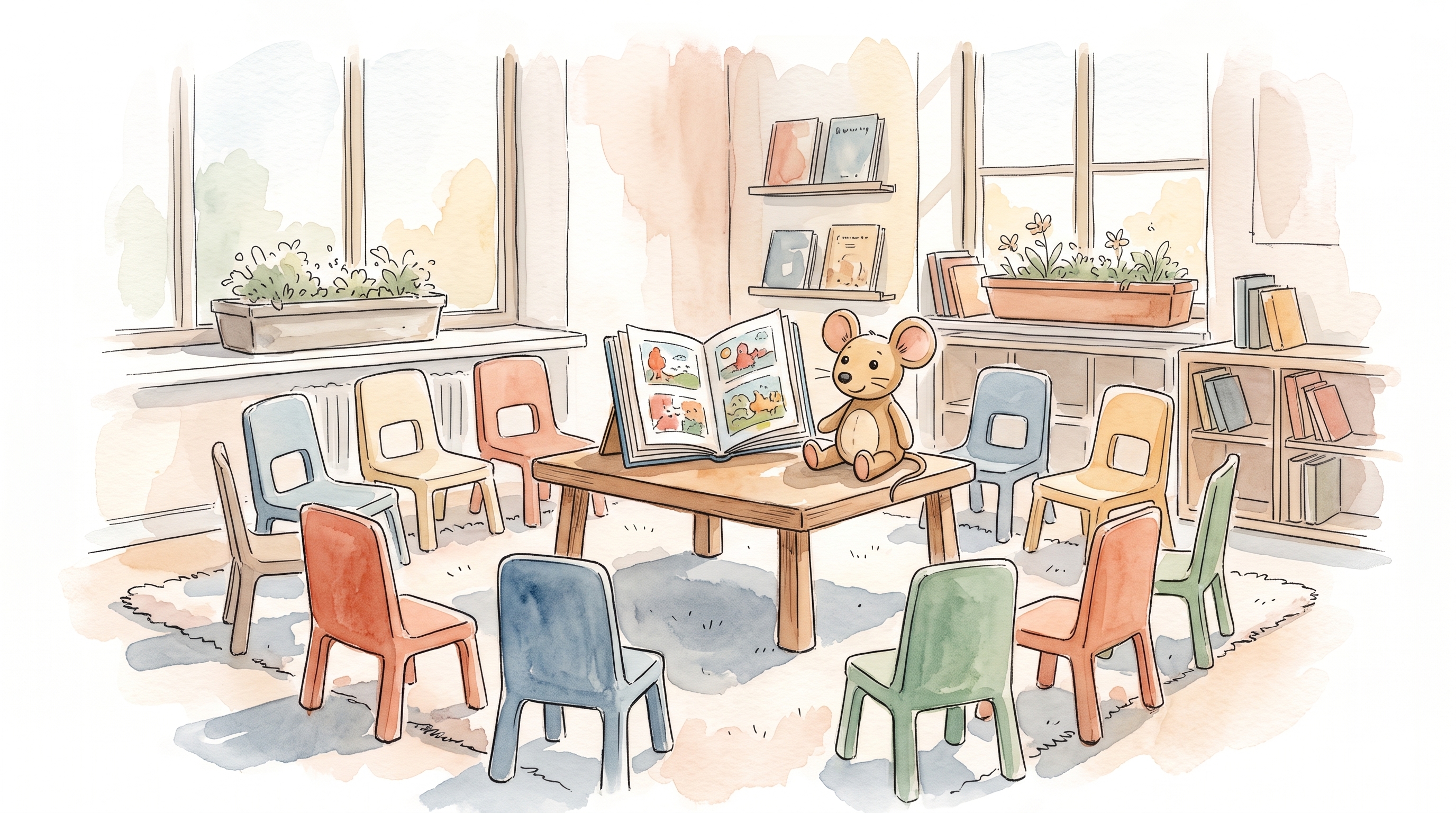
You've got a lesson on Friday and nothing that fits it. The closest book in the library is about a topic that's almost right, set somewhere that means nothing to your kids, with a kid on the cover who looks nothing like anyone in the room. So you make do. To make a custom picture book for a lesson, you don't need an art budget or an illustration degree: you need one clear teaching point, a handful of pages written the way you'd say them out loud, and a tool that illustrates them for you while keeping the characters consistent.
Here's the honest version of how that goes.
Start with the one thing the book has to teach
Not three things. One.
The custom book wins precisely because it's narrow. A store-bought book has to be general enough to sell to everyone. Yours only has to land your point with your class. "Why we wash our hands." "What to do when you feel the worry-wobbles before a test." "How a seed becomes a sunflower." Write the teaching point as a single sentence at the top of the page. Everything else serves it.
Then decide who the story follows. A class mascot is the easiest choice, because it can come back in every future lesson book, so the kids meet a friend they already know each time you teach something new.
Write the pages the way you'd read them aloud
You read to your class all day. You already know how this sounds.
A picture book is a line or two per page, written for the voice, not the eye. Short sentences. A rhythm you can land. A page turn right at the moment of "and then what?" You don't need fancy prose, you need the plain, warm voice you already use when twenty kids are sitting on the carpet looking up at you. Aim for something like eight to sixteen pages for a single lesson; you can feel when it's complete.
Worried you're "not a writer"? Good news: picture books reward plain and true over clever. If you can explain the lesson to a six-year-old out loud, you can write this.
Let the illustration be the part you don't do
The drawing is the part that used to make this impossible, and it's exactly the part you no longer have to do.
This is where Storybench fits. You build your character once (the class mascot, say), and every page inherits it, so the mascot looks like the same mascot from the first page to the last. No drawing or illustration skills required. You describe what's happening on each page ("Mo the mouse stands at the sink, sleeves up, looking unsure") and the page comes back illustrated, with your character already in it, in one consistent style you picked once.
If a page isn't quite right, you re-illustrate it until it is. When the book's done, you can publish a print-ready PDF to print for the carpet, or an EPUB to put on the classroom tablets. You stay the author the whole way; the tool just draws. See how it works for the full flow.
Why this is lighter work than it sounds
Because you've removed the two things that used to eat the time: hiring or being an illustrator, and fighting a layout program.
What's left is the part you're good at. You know the lesson. You know how your kids talk. You know what'll make them laugh and what'll make the point stick. The pages come quickly once the teaching point is clear, and the illustration happens as you go instead of being a separate project you dread. (Our honest caveat: your first one is the slow one while you get the feel of it. After that your cast is already built, and the setup work is behind you.)
And the next lesson book is faster still, because your mascot is already built. Build the class cast once, reuse it across a whole shelf of little lesson books. That reuse is the heart of the personalized classroom books idea, and it's how a single character can teach handwashing one week and early-reading skills the next.
Frequently asked questions
Can a teacher really make a custom picture book without an illustrator?
Yes, once the teaching point is clear and you're not drawing it yourself. Write a handful of short pages in your read-aloud voice, illustrate them with a tool that keeps your character consistent, and print or share. Your first book is the slow one; later books go faster because your character is already built.
Do I need any art or design skills?
No. You decide the look of your character and write the pages; the illustration is handled for you in one consistent style, and the print-ready PDF or EPUB is exported for you. No drawing and no layout software required.
Can I reuse the same character for more than one lesson?
That's the point. Build a class mascot once and it shows up, looking the same, in every lesson book you make after that, so kids meet a familiar friend each time and your prep gets shorter.
Can I print the book for my classroom?
Yes. You can publish a print-ready PDF to print copies for the carpet or for take-home, and an EPUB for tablets. The same book works both ways without redoing the work.
Is Storybench free for teachers?
No, it's a paid tool, and illustrating pages needs an active plan. You're welcome to look around and see how it works before you decide.
Next time a lesson needs a book that doesn't exist yet, make it. Start your book and turn Friday's topic into a story that's actually about your class.