Storybench vs Childbook.ai
Want a children’s book, but want it to actually be yours?
There’s more than one way to make an illustrated book. Here’s where Storybench fits next to the tools you’re probably weighing, laid out plainly. We say what each one is good at, then where we differ: you write every word, and your cast stays consistent on every page.
Want a children’s book, but want it to actually be yours?
Want the book to sound like you, not like a bot?
Free to start is easy. But whose book is it at the end?
A book starring your own family is lovely. But is it a book you wrote?
You want to lay out a book and keep your hero from changing on every page?
Reusable characters are great. But where’s the finished book?
Journals and puzzle books, or an illustrated story with real characters?
Love Canva, but tired of your character changing on every page?
Gorgeous pictures, but where’s the actual book?
ChatGPT can draw a picture. But can it hand you a finished book?
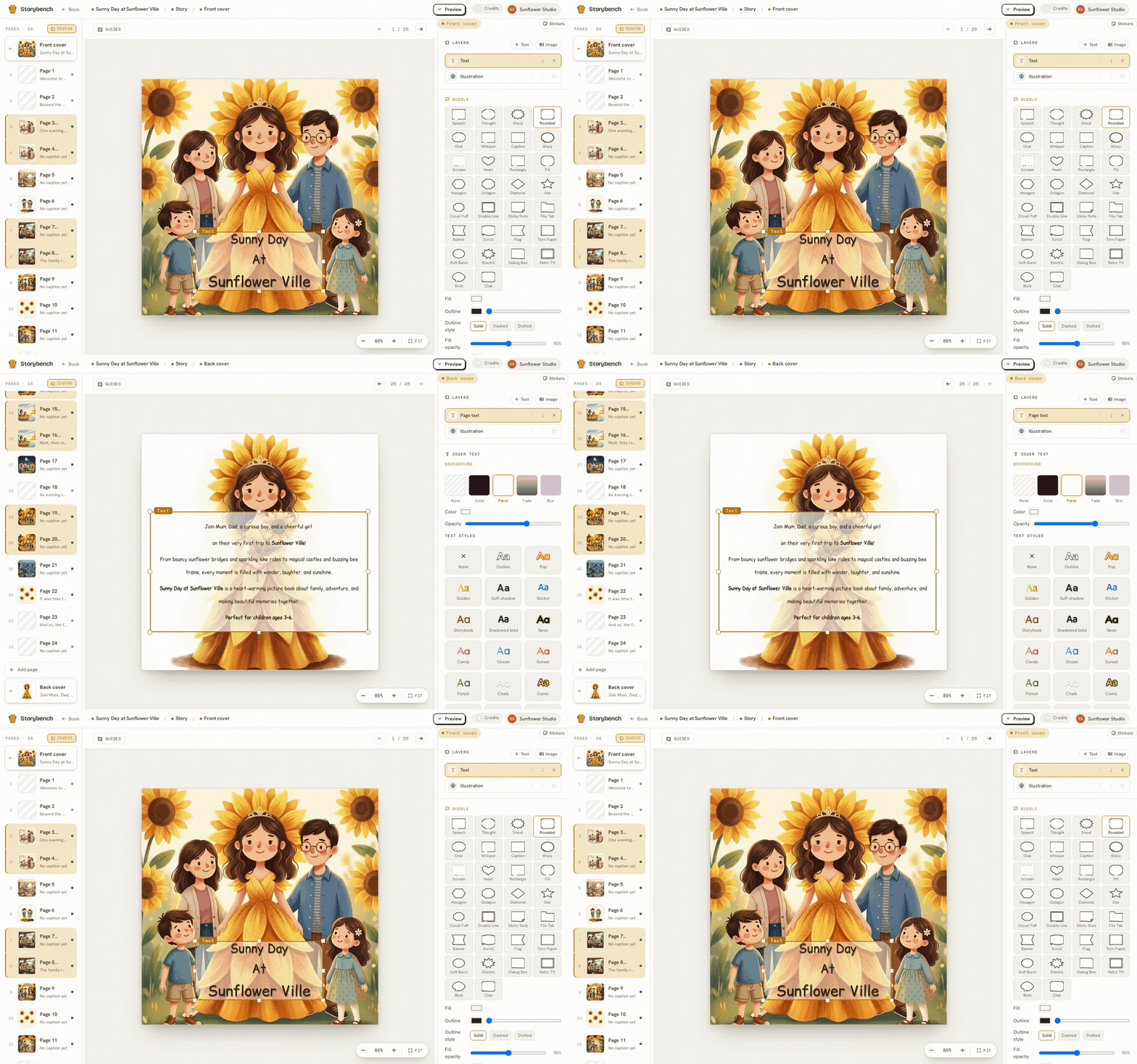
You build each character a single time, with reference pictures that fix how they look. From then on your cast loads into every page automatically, so your hero looks like herself on page one and page thirty alike. You never re-describe her, and the AI can’t wander off into a stranger.
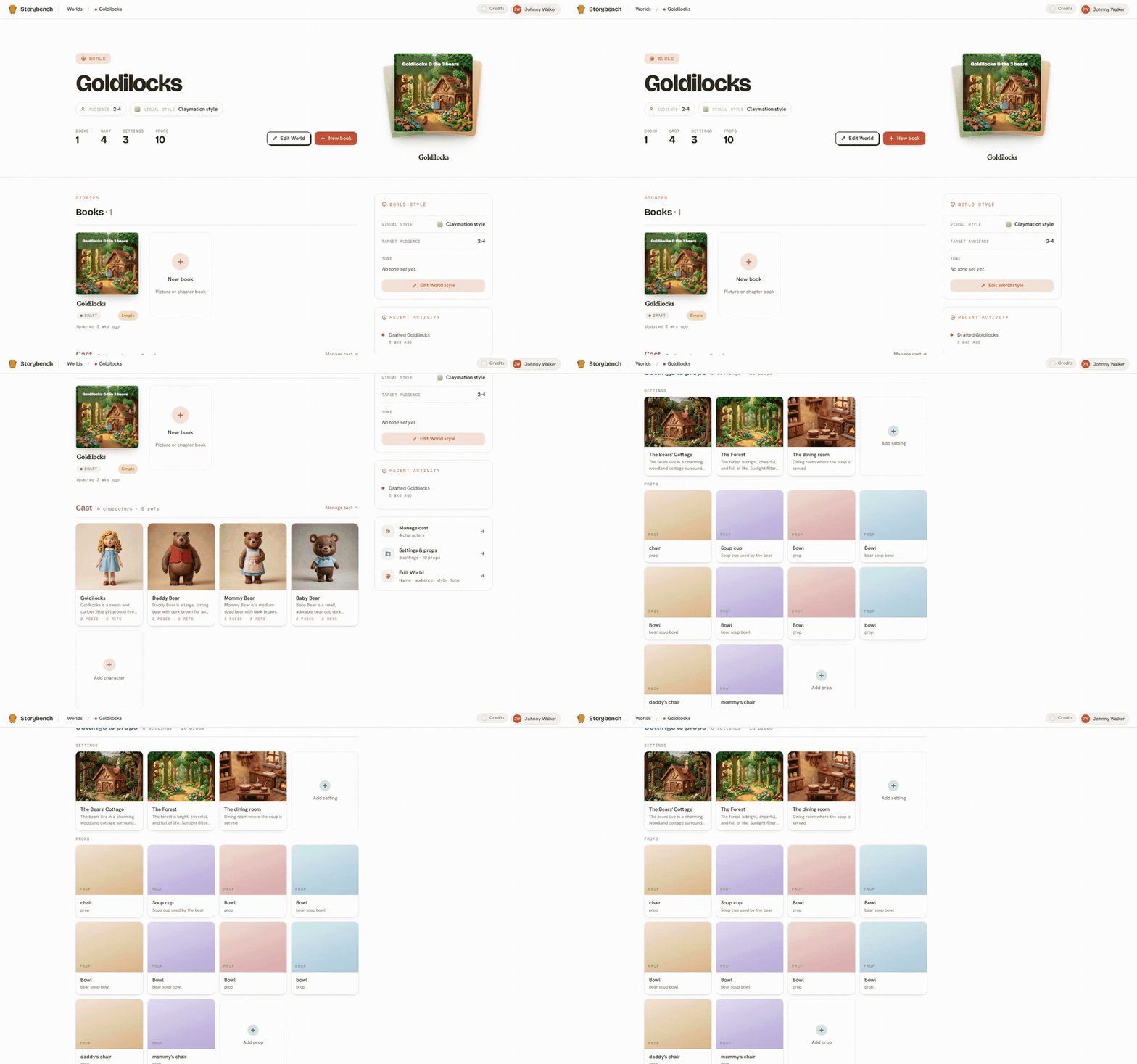
Your cast lives in the World, not inside a single book. So every new title in your world reuses the same characters, the same look, the same world. The first book is the work. The second book is the easy one, because everything your readers came back for is already waiting.
See it step by step: build your cast, make more books in your world, or take the full tour of the features.
Create your account and start with your words. You only spend credits when you ask the AI to draw.
Start creating