Canva is a design tool, and a great one. Storybench isn’t a design tool. It’s built for a single job: an illustrated book where the same character shows up, looking like herself, on every single page.
In a general design tool, keeping a character consistent across thirty pages is a job you do by hand. In Storybench, it’s the thing the tool is for.
What Canva is great at
Canva is a wonderful design tool, and we mean that. Millions of people use it because it’s fast, friendly, and endlessly flexible, with templates for nearly anything and its own print service. If you want to lay something out by hand, few tools are nicer to work in.
The honest comparison
| What matters | Storybench | Canva |
|---|---|---|
| Who writes the story? | You. Every word. | You |
| Do your characters stay the same on every page? | Yes, a reusable cast loads into every page | You place the art yourself |
| What you hold at the end | A print-ready PDF & an EPUB | PDF & Canva Print |
| Does book two get easier? | Yes, your cast carries into the next title | A general design tool |
| Made specifically for a book? | Yes, that’s the whole point | A general design tool |
Scroll sideways to see every column.
Storybench’s side is current as of July 2026. Canva changes often, so check their site for their latest.
The same cast, on every page and every book.
Build your cast once.
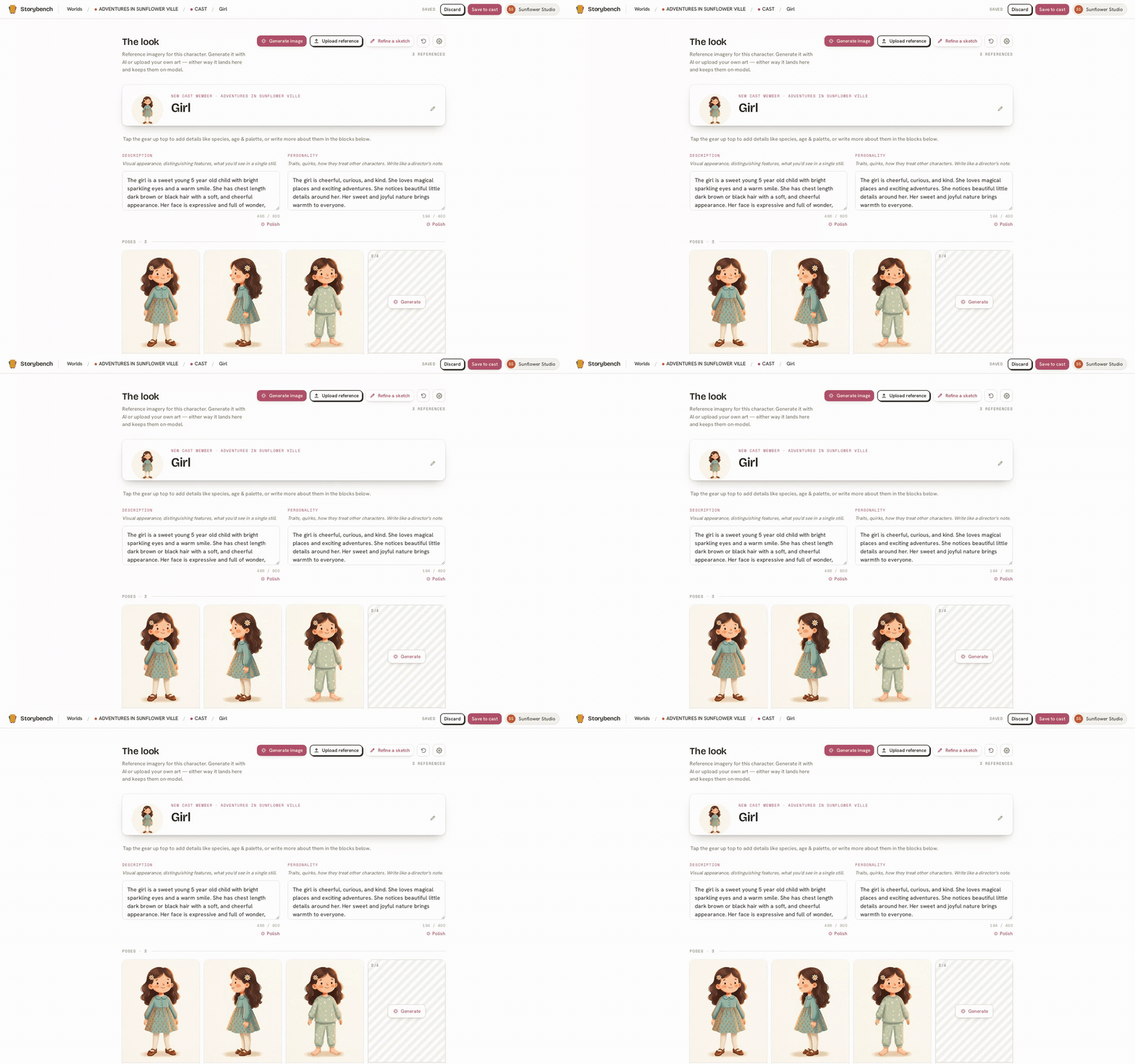
You build each character a single time, with reference pictures that fix how they look. From then on your cast loads into every page automatically, so your hero looks like herself on page one and page thirty alike. You never re-describe her, and the AI can’t wander off into a stranger.
One World, a whole run of books.
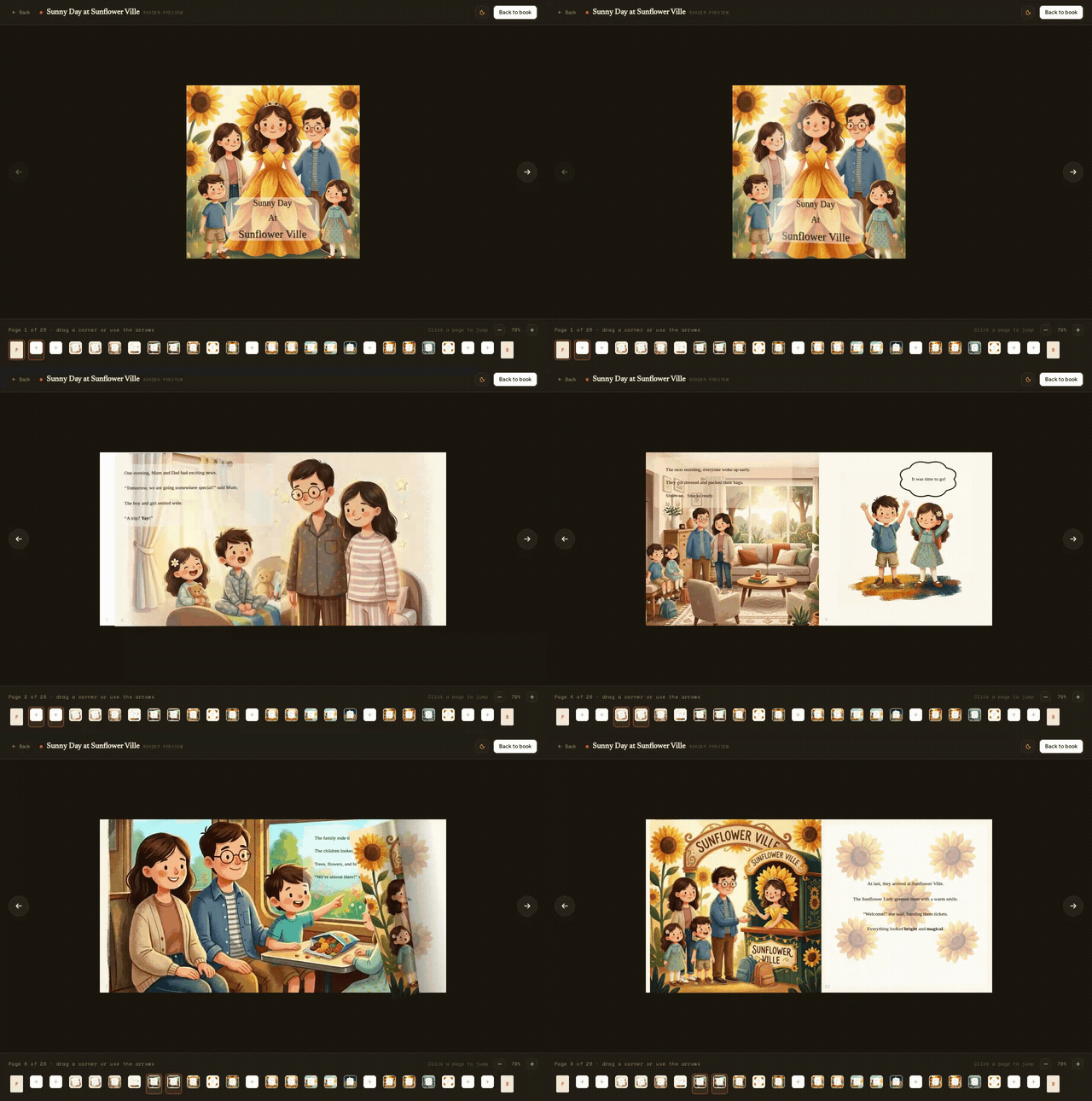
Your cast lives in the World, not inside a single book. So every new title in your world reuses the same characters, the same look, the same world. The first book is the work. The second book is the easy one, because everything your readers came back for is already waiting.
See it step by step: build your cast, make more books in your world, or take the full tour of the features.
Where it differs for making a book
The difference isn’t quality, it’s the job. Canva gives you a blank canvas and every tool to fill it. Storybench gives you a cast: build your characters once, and they load into every page automatically, so page thirty still looks like page one without you fighting for it.
You still art-direct every page in Storybench (layer text, images, and stickers, place each to the pixel), but the consistency is handled for you, and you finish with a print-ready PDF and an EPUB.
Want the longer story? See how the cast keeps your characters consistent on the features page, follow the step-by-step in help, or browse the other comparisons.
Questions you’re probably about to ask
Can I make a children’s book in Canva?
You can lay one out in Canva, which is a flexible design tool with templates and its own print service. Storybench is built specifically for illustrated books: you build a reusable cast once and it stays consistent on every page automatically, then you export a print-ready PDF and an EPUB.
What does Storybench do that a design tool doesn’t?
It keeps your characters consistent for you. You build a cast once and it loads into every page, so your hero looks like herself throughout, and it carries into your next book. You write the words; the AI only illustrates the cast you made.
Write the book only you could write.
Create your account and start with your words. Free to begin.
Start creating