Your cast is the set of characters that appear across your books: your hero, their best friend, the grumpy cat, the wise old owl. Building the cast well is the single most valuable thing you will do in Storybench, because everything downstream leans on it. This one is worth reading slowly.
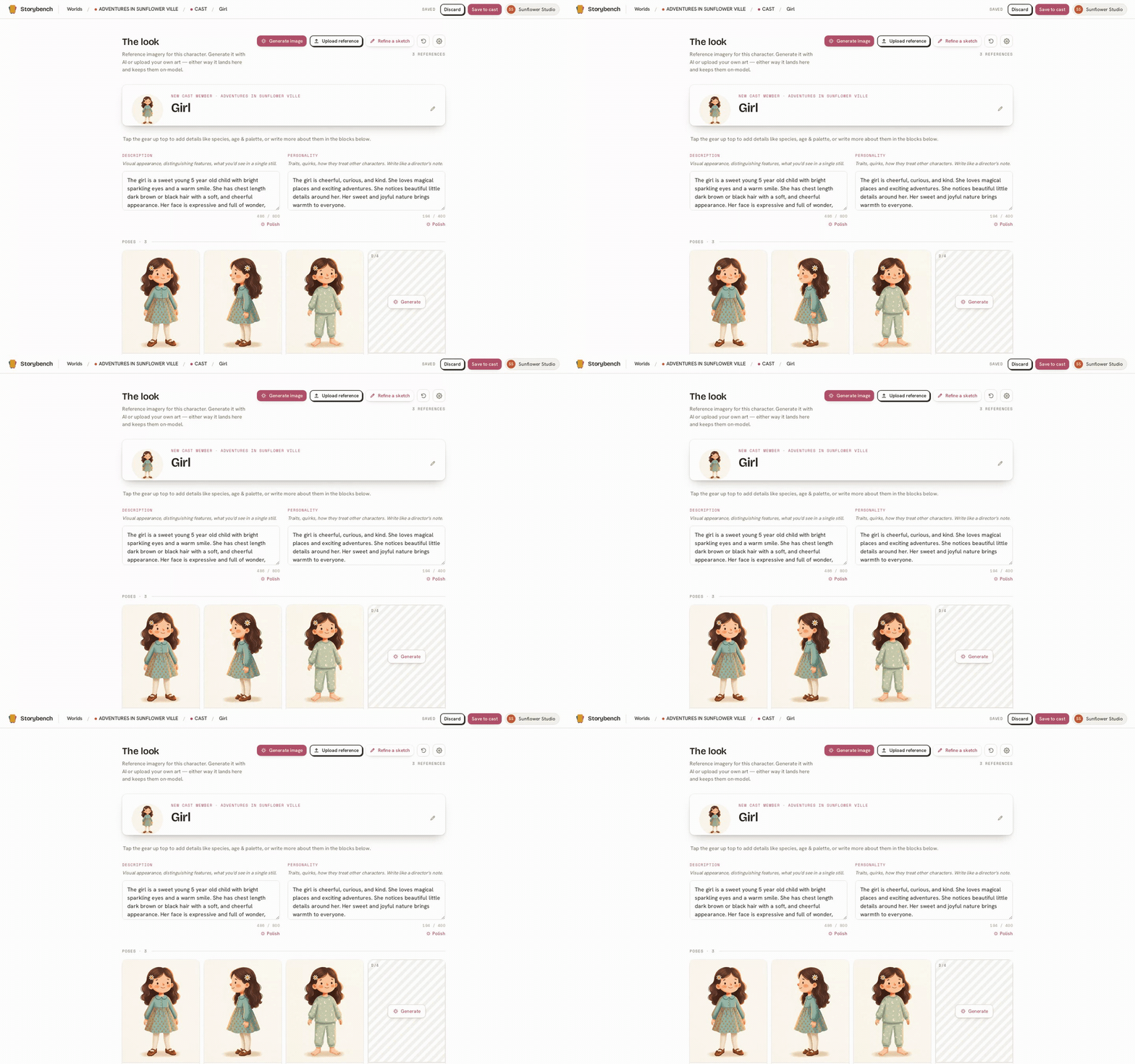
Adding a character: the name and description
To add a character you give them a name and a short description. The description is where you say who they are in plain words: "a small brave girl with curly red hair, freckles, and a yellow raincoat," or "a round, friendly robot with one blinking blue eye."
Be specific about the things that make them recognisable (hair, colour, clothing, a signature item) and relaxed about the rest. You do not need to write a novel. A few clear, concrete details do more than a long, vague paragraph.
If you would like a hand, you can polish a character's description. That tidies and enriches what you wrote while keeping your meaning, which is handy if you know the character in your head but the words are not flowing.
Reference pictures: the part that matters most
A character is not ready until they have at least one reference picture. References are the pictures Storybench looks at to keep the character the same on every page. They are required, and they are the reason your hero stays your hero. You add them in one of two ways.
Upload your own art
If you already have artwork (a drawing, a character sheet, an image you made elsewhere), you can upload it. This is the most direct way to say "this exact character, please." If you have a look in mind, uploading is often the fastest route to it.
Generate art
If you do not have art, you can generate some from the name and description. Storybench makes options in your World's style, and you look them over. When you generate, you are shown choices.
Keep or discard
Generated options are yours to judge. Keep the ones that feel right, and discard the ones that do not. Kept pictures become part of the character's reference set and will guide future illustrations. Discarded ones are set aside (they are not gone forever, see below).
You do not have to settle. If nothing quite lands, adjust the description and generate again. It is normal to try a few rounds before a character clicks. This upfront care pays off on every page afterward.
How many references should a character have?
One good reference is enough to get going. A few, showing the character clearly from a couple of angles or in a couple of poses, tend to give steadier results across a whole book, because Storybench has more to go on. There is a limit to how many pictures can feed a single illustration, so you do not need dozens, and piling on too many can actually get in the way. Aim for a small handful of strong, clear references rather than a big pile of so-so ones.
Tips for references that work well
- Show the whole character, clearly. A clean, well-lit picture where you can see their face and outfit beats a dramatic, shadowy one.
- Keep them on-model. If your hero always wears a red scarf, make sure the references show the red scarf. Whatever is in the references is what carries forward.
- Match the vibe of your World. References in the same spirit as your chosen style settle in most smoothly.
- Prefer a few strong pictures over many weak ones. Quality guides better than quantity.
- Revisit if a page looks off. If a character keeps drifting, strengthening their references is usually the fix.
Why this matters
Every illustration in every book pulls your cast in automatically through the World. The care you put into a character's references here is the care that turns up, quietly, on page after page, book after book. Do it once, do it well, and then simply enjoy writing.
Next, a closer look at references themselves: reference pictures, explained.