Neolemon and Storybench agree on the hardest thing: a character should stay the same across scenes. Neolemon is a cartoon-character generator built around exactly that, and it’s good at it. The difference is what you walk away with.
Neolemon hands you consistent illustrations. Storybench hands you a book: your written story, illustrated by a consistent cast, assembled into a file you can publish.
What Neolemon is great at
Neolemon does one thing really well: create a character once, then reuse it across scenes, poses, and expressions with the same face and style, in a range of art looks. As a way to produce a consistent character’s artwork, it’s a genuinely strong tool.
The honest comparison
| What matters | Storybench | Neolemon |
|---|---|---|
| Who writes the story? | You. Every word. | It illustrates; you write elsewhere |
| Do your characters stay the same on every page? | Yes, a reusable cast loads into every page | Yes, reusable characters across scenes |
| What you hold at the end | A print-ready PDF & an EPUB | Illustration image files |
| Does book two get easier? | Yes, your cast carries into the next title | A character generator |
| Made specifically for a book? | Yes, that’s the whole point | A character generator |
Scroll sideways to see every column.
Compared July 2026, against Neolemon’s own site.
The same cast, on every page and every book.
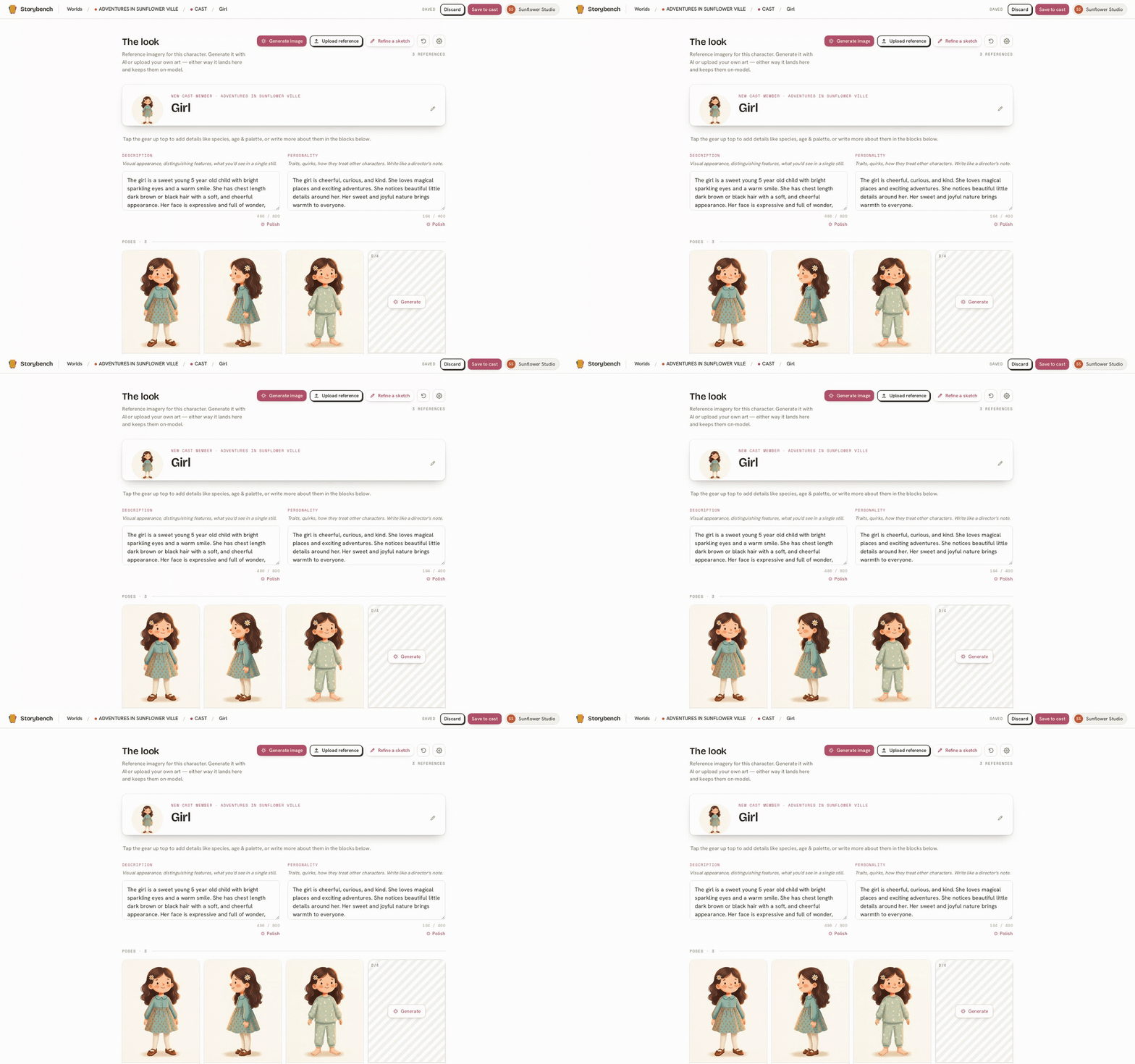
Build your cast once.
You build each character a single time, with reference pictures that fix how they look. From then on your cast loads into every page automatically, so your hero looks like herself on page one and page thirty alike. You never re-describe her, and the AI can’t wander off into a stranger.
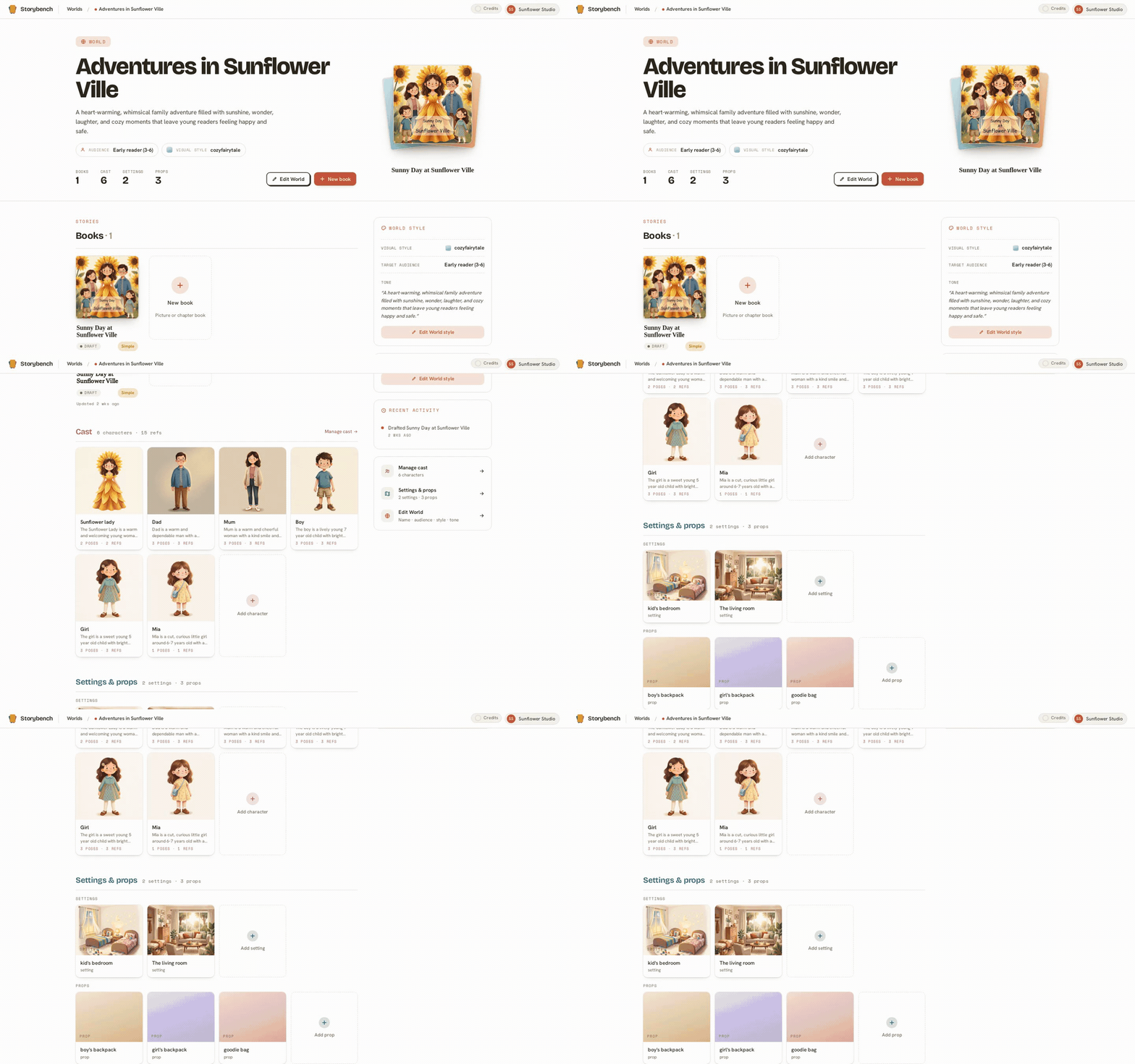
One World, a whole run of books.
Your cast lives in the World, not inside a single book. So every new title in your world reuses the same characters, the same look, the same world. The first book is the work. The second book is the easy one, because everything your readers came back for is already waiting.
See it step by step: build your cast, make more books in your world, or take the full tour of the features.
Where it differs for making a book
If you make a book with a character generator, you still become the assembler: write the story somewhere else, generate each scene, then lay the pages out in a third tool and figure out how to publish. Storybench is the one place that does the whole job, with the same consistency baked in.
You write the page, the AI illustrates only the cast you built, and you finish with a print-ready PDF and an EPUB. And your cast carries into every book that follows, so book two is the easy one.
Want the longer story? See how the cast keeps your characters consistent on the features page, follow the step-by-step in help, or browse the other comparisons.
Questions you’re probably about to ask
What is the difference between Storybench and Neolemon?
Neolemon generates reusable cartoon characters you can place across scenes, poses, and expressions, and outputs image files. Storybench turns your written story into a finished, publishable book: you author every word, the AI illustrates a consistent cast, and you export a print-ready PDF and an EPUB.
Do both keep a character consistent?
Yes, both are built to reuse the same character across images, which is the hardest part of AI illustration. The difference is that Storybench wraps that consistency into a whole book: your words, your page layouts, and export files, with the cast loading into every page automatically.
Write the book only you could write.
Create your account and start with your words. Free to begin.
Start creating