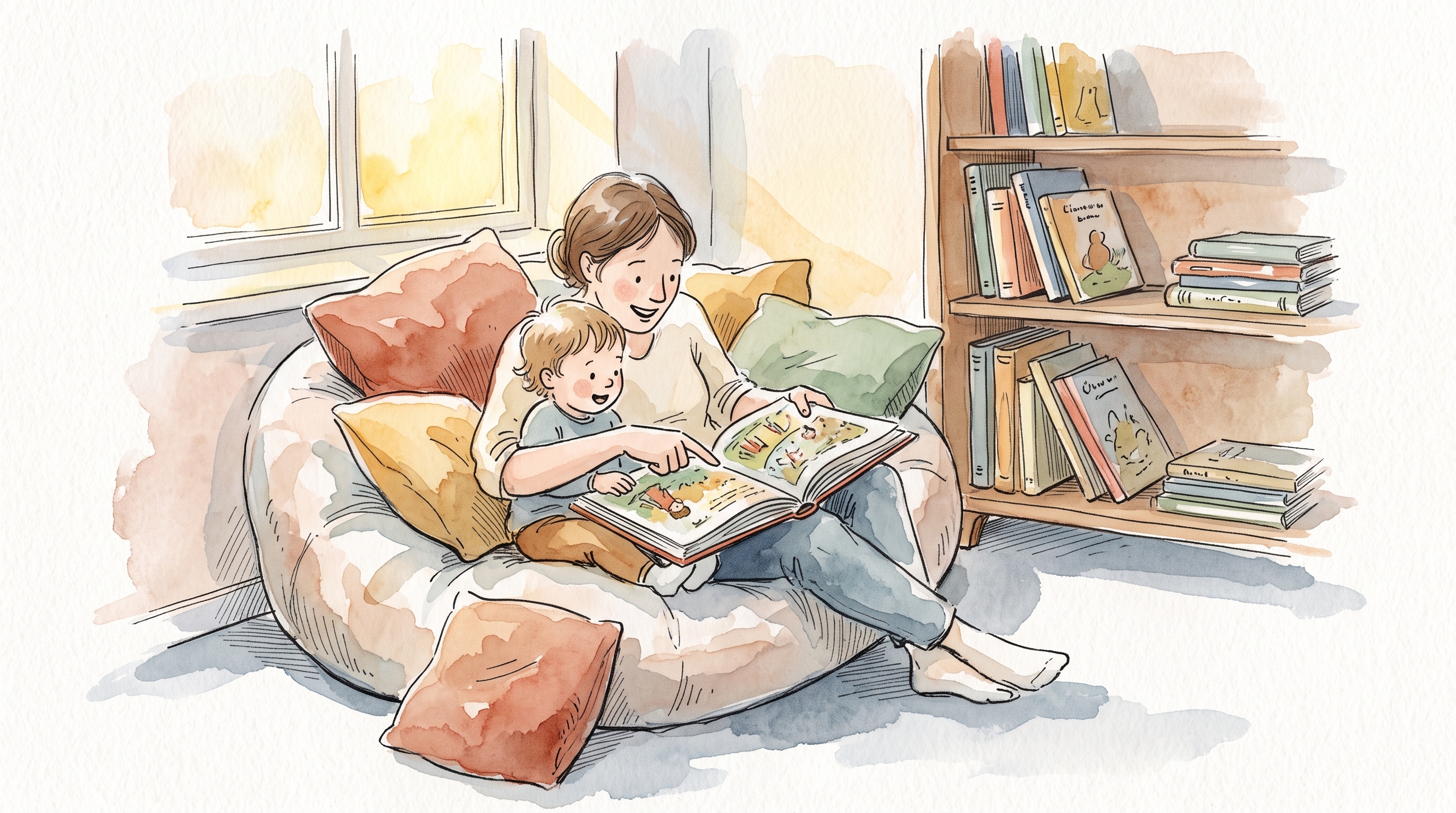
How do you market a self-published children's book? You reach the grown-ups who buy books for kids: parents, grandparents, teachers, and librarians. In practice that's a handful of things done well: a listing that's easy to find, a cover that sells at thumbnail size, honest early reviews from real readers, a few posts where those adults already hang out, some local outreach to schools and libraries, and a home base of your own (a simple author page or email list). And the quietest growth engine of all, the next book with the same characters.
None of that needs a big budget or a marketing degree. It needs a plan and a little patience. Here's the honest version, written for picture books and early readers specifically, not generic "promote your book" advice that could be about anything.
One note on scope. This is the third in our Resources trilogy: first you self-publish the book, then you get it live on Amazon KDP, and now you sell it. If you haven't finished the book yet, start with those two. If you're staring at a live listing wondering why it's quiet, keep reading.
First, the thing nobody says out loud: you're not selling to children
A four-year-old has never bought a book in their life. Every children's book on earth is chosen and paid for by an adult: a parent at bedtime, a grandparent looking for a gift, a teacher building a classroom shelf, a librarian filling a request. That one fact should shape almost everything you do.
So write your blurb to the grown-up, not the kid. Name the age range. Say what the book is really about (kindness, bedtime, a first day of school, a fear of the dark). Tell them the feeling a child walks away with. A parent scanning a shelf isn't asking "is this clever," they're asking "will my kid ask for this again, and is it okay to read fifty times." Answer that, and you've done most of the selling.
The child matters too, of course. They're the one who falls for the character and demands the sequel. But the buyer and the reader are two different people, and your marketing has to speak to both.
Start before you hit publish
Marketing that starts on launch day is marketing that starts late. The best time to line things up is while the book is still in production, so the moment it goes live it already has a little momentum.
- Get the cover right. This is the single highest-leverage thing you own. Most buyers see your book first as a tiny thumbnail next to a hundred others. If the title is unreadable and the art is muddy at that size, nothing else you do will matter. Look at your cover shrunk to the size of a postage stamp. Is it clear? Is it charming? Fix it there.
- Gather a few early readers. Line up a small group (friends with kids, a teacher you know, a couple of librarians) who'll actually read the book and, if they like it, leave an honest review when it launches. A book with zero reviews is a harder sell than one with five real ones.
- Claim your author presence. Set up a free Amazon Author Central profile so your name links to everything you publish, per Amazon's Author Central. A reader who loves one book should be able to find the next one in a click.
- Have one place to send people. Even a single simple page with the cover, the blurb, and a buy link beats sending everyone to a bare Amazon listing.
Make your listing findable
Most of your sales will come from someone searching, not someone you personally told. So the words attached to your book do quiet work every single day. On Amazon KDP, three fields carry most of that weight.
- Keywords. KDP lets you enter "up to seven keywords or short phrases" that help the right readers find you, per its keywords help. Don't waste them on your title. Think like a tired parent typing at 9pm: "bedtime story for toddlers," "picture book about sharing," "books for a 5 year old who loves dinosaurs."
- Categories. You can place your book in up to three categories, per KDP's categories help. Pick specific, honest ones over broad ones. Being visible in a narrow shelf you actually fit beats being invisible in a giant one.
- Description. Your blurb is an ad, so write it like one. Lead with the hook, keep it short, break it into a few readable lines, and end with the age range and a reason to buy today.
If you built your book in Storybench, a lot of this metadata (title, subtitle, author, ISBN) is filled in as you go, so it's ready to paste into KDP rather than reinvented at the finish line.
Earn honest reviews (the right way)
Reviews are social proof, and social proof sells children's books more than almost anything else, because a stranger vouching for a book reassures a nervous gift-buyer. But there's a firm line here worth respecting: don't pay for reviews or trade anything for a positive one. Amazon's community guidelines prohibit reviews that are bought or written in exchange for compensation, and getting caught can sink a listing. Fake reviews aren't just against the rules, they read as fake, and parents have sharp instincts.
What you can do, freely and honestly:
- Ask real readers. Send advance copies to people who genuinely might like the book (teachers, librarians, parents in your circle) and ask them to leave an honest review if they do. Honest is the operative word.
- Make it easy. People want to help but forget. A friendly nudge with the direct link, a week or two after launch, works better than hoping.
- Welcome the reader's voice too. A short line inside the back cover ("If your little one enjoyed this, a review helps other families find it") gently reminds the buyer without pressure.
Go where the parents already are
You don't need to be everywhere. You need to be a few places, consistently, where the adults who buy kids' books already spend time. What if you stopped trying to "do social media" and just showed people the book instead?
That's the whole trick for a children's book. The product is visual and warm, which is a gift online. A few things that genuinely work:
- Share the pages. A single beautiful spread, or a short read-aloud of one page, does more than any "buy my book" post. Let the art do the talking.
- Tell the making-of story. Parents love the human behind the book. How you came up with the character, the bedtime that started it, the mess of getting it done. That story is yours alone and it's more shareable than the sales pitch.
- Join the rooms, don't just broadcast. Parenting groups, teacher communities, homeschool forums, read-aloud circles. Be a helpful person there first; mention the book when it's genuinely relevant.
Here's where making the book yourself quietly pays off. Storybench exports image files of every page, so you already have clean, shareable art on hand for posts and previews, without screenshotting or re-exporting anything. You made the book once; the marketing images fall out of it for free.
Think local (this is your unfair advantage)
Big authors can't do what you can do: turn up in person. A children's book has natural homes in the real world, and a local author is a small story in itself, the kind community papers and library newsletters like to run.
- Libraries. Ask about a story-time slot or a local-author shelf. Librarians are matchmakers between kids and books, and they order books too.
- Schools and preschools. A read-aloud visit is magic for the kids and word-of-mouth gold for you. Every kid who loved it goes home and asks a parent to buy it.
- Independent bookstores. Local shops often champion local authors. Ask about a consignment shelf or a signing.
- Story-time and community events. Farmers markets, fairs, library events. Anywhere families gather is a place your book belongs.
Build a home base you actually own
Every reader you reach on a marketplace or a social platform is rented, not yours. The algorithm changes, the feed moves on, and you start from zero. So build a small patch of ground you own.
- A simple author page. Cover, blurb, buy links, and a way to hear about the next book. It doesn't need to be fancy, it needs to exist.
- An email list. The most durable marketing tool an author has. When your next book launches, a list of people who already love the first one is worth more than any ad. Even a tiny list beats no list.
- Goodreads. Its free Author Program lets you claim your book, add a profile, and reach readers on a platform built entirely around book discovery, per Goodreads' Author Program.
Your real growth engine: the next book
Here's the secret that changes how you think about all of this. The best marketing for your first children's book is your second one.
What if a reader didn't just like your book, but fell for your character? What if they wanted more of that exact character, that exact world? What if every new title you published quietly sold the ones before it? That's not a hypothetical, it's how children's books actually work. Kids don't ask for "a book," they ask for more of the character they love. A recognizable cast across a series is the most powerful, most affordable marketing you'll ever have.
Which is exactly why keeping your characters consistent matters so much, and why we point the whole of Storybench at it. You build your cast and world once, and every new book reuses the same characters looking like themselves, page after page, book after book. No re-describing your hero, no "why does she look different now." You write the story; the AI only illustrates. The book that sells your last book is easier to make when the character is already waiting for you.
Common questions
How do I market a children's book with no budget?
Focus on the free, high-leverage moves: a strong cover, a findable listing, honest early reviews, sharing your actual pages on social, and local outreach to libraries and schools. Then start an email list so each new book has an audience waiting. Reach beats spend for children's books.
Who actually buys children's books?
Adults: parents, grandparents, teachers, and librarians. The child is the reader, but a grown-up is always the buyer, so write your blurb, reviews, and ads to reassure the person holding the wallet.
Can I pay for reviews to get started?
No. Amazon's community guidelines prohibit reviews that are paid for or written in exchange for compensation. Send advance copies to real readers who might genuinely like the book, and ask for honest reviews instead. Fake ones read as fake anyway.
What's the single best way to sell more children's books?
Write the next one, with the same characters. A consistent cast across a series turns one-time buyers into fans who come back, and each new title lifts the ones before it. It's the closest thing to a marketing cheat code in children's publishing.
Start small, stay steady
Marketing a self-published children's book isn't one big launch, it's a lot of small, honest moves: a cover that works at thumbnail size, a listing built for how parents search, real reviews from real readers, a few good posts, some local love, a home base you own, and a next book that carries the same characters forward. You don't have to do all of it at once. Pick two things this week and start.
And if the reason your marketing stalls is that making the next book feels like starting over, that's the exact gap we built to close. Keep your cast consistent, reuse your world, and turn one book into a series readers keep coming back for. Start your first book whenever you're ready, and let the characters do the selling.