You type a prompt, you cross your fingers, you see what comes back. For a single image, that's a fun little gamble and it usually pays off. For a whole book, prompt-and-pray quietly falls apart, because a book isn't one lucky picture. It's thirty-something pictures that all have to agree with each other.
The fix isn't a better prompt. It's a different workflow: you author and direct, instead of rolling the dice page after page.
Why does prompt-and-pray break on a book?
Because every roll is independent. Each generation starts from scratch with no memory of the last one, so the odds reset on every page. One great page is a coin landing heads. A whole consistent book is thirty heads in a row. Nobody flips that.
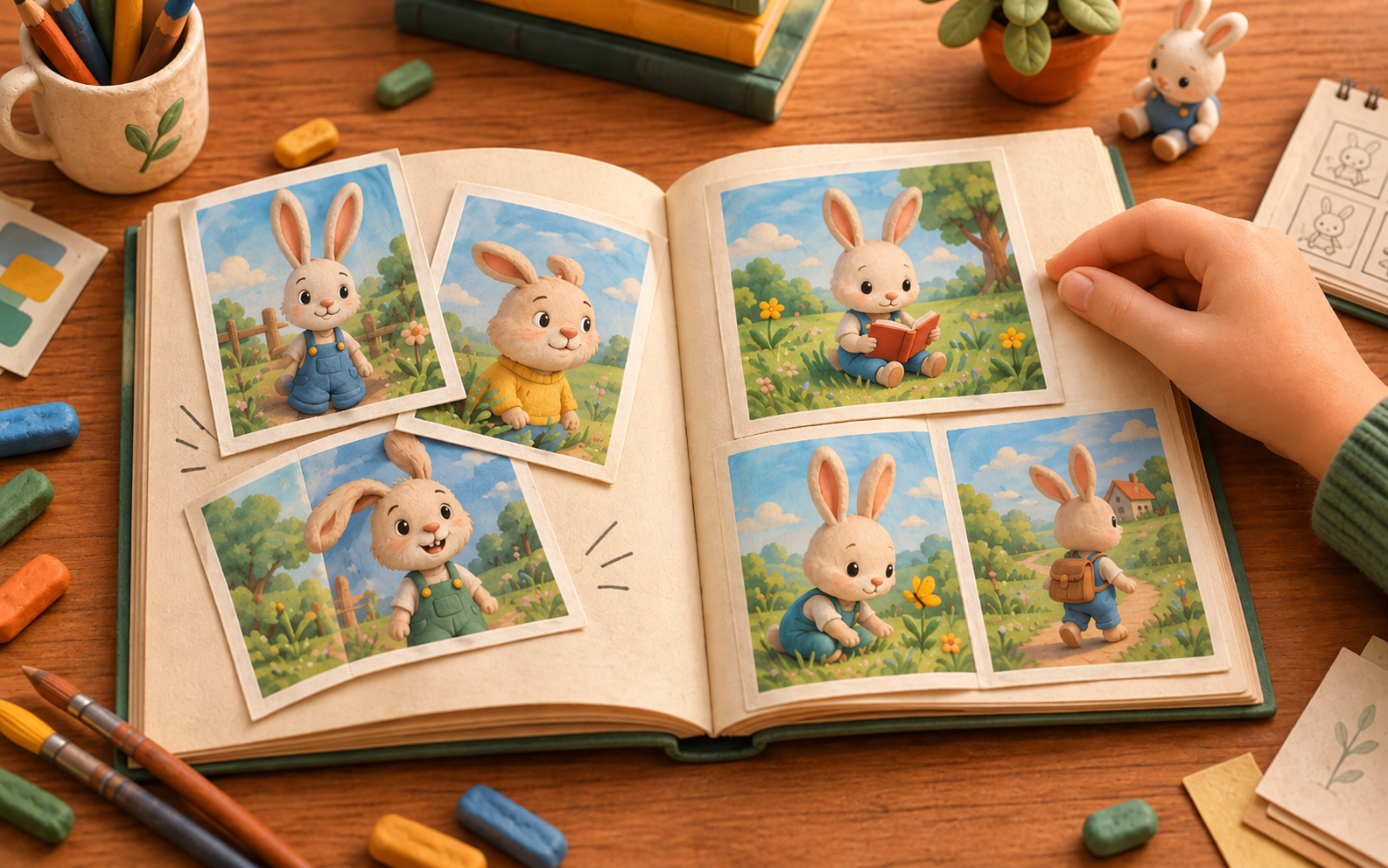
So the hero you nailed on page one drifts. Her hair changes length. Her freckles vanish. The cozy palette goes cold for three pages and warm again. Each picture might be lovely on its own, and the book still feels like twelve different artists drew twelve different kids. A grown-up might shrug. A four-year-old will stop you and ask why the bunny looks wrong. They notice everything.
But can't I just write a really detailed prompt?
This is the natural next move, and it's worth being honest about: it helps, a little. You paste a wall of description into every page, "a six-year-old girl, brown curly hair, green dungarees, one missing front tooth," and the odds get better.
But you're now doing two miserable jobs. You're re-describing your character from memory on every single page, which is tedious and error-prone. And you're still gambling, just with loaded dice. "Better odds" across thirty pages still means a few of them come back wrong, and you re-roll, and re-roll, and the look creeps anyway. Detail is a patch on the real problem, which is that nothing is remembering your character for you.
What does the authored alternative look like?
Flip the whole thing around. Instead of describing your character thirty times and hoping, you describe her once, as a thing the tool keeps. Then every page reuses her. You stop gambling and start directing.
The difference in plain terms:
- Prompt-and-pray: each page is a fresh roll, no memory, you re-describe and re-roll until it's close, drift creeps in anyway.
- Authored: you build the character and the look once, then write what happens on each page and the cast and style fill themselves in. The character can't drift because nothing is being re-rolled.
Now, someone's going to say this just means the AI does the real work and you're along for the ride. It's the opposite. When you're not babysitting the dice, you're actually directing: deciding what happens on each page, how it's framed, what the mood is. The drudgery (keeping the hair the right length) goes to the tool. The authoring (the story, the choices, the heart) stays with you.
This is the whole idea behind Storybench
We built Storybench because prompt-and-pray was never going to make a book worth printing. You build your cast, settings, and props once in your World, pick one illustration style, and then every page inherits all of it. You write the page; you never type a style word; the character looks like herself from page one to the end. You re-illustrate any page that isn't right, without losing what already works.
That's the line we care about: you're the author and director, the AI just illustrates. See how it works, or what it's built for.
Frequently asked questions
Why do my AI illustrations look different on every page?
Because each image is generated independently, with no memory of the last one. Without a persistent character that the tool reuses, every page is a fresh roll of the dice, so the look drifts. The fix is a workflow that saves your character once and reuses it everywhere.
Can detailed prompts fix character consistency?
They improve the odds but don't solve it. Across a whole book you're still re-describing the character every page and still gambling on each result. A persistent cast removes the gamble entirely instead of just nudging the odds.
Does an authored workflow mean the AI writes my book?
No. You write the words and direct every page; the AI only illustrates. Authoring means you keep control of the story and the choices, while the tool handles keeping the art consistent.
Is prompt-and-pray ever fine?
For a single one-off image, sure, it's quick and fun. The problem is only books, where dozens of images have to stay consistent. The more pages you have, the worse the dice get.
Stop flipping coins and start directing. When you're ready to author a book that actually holds together, start your book and build your cast once.