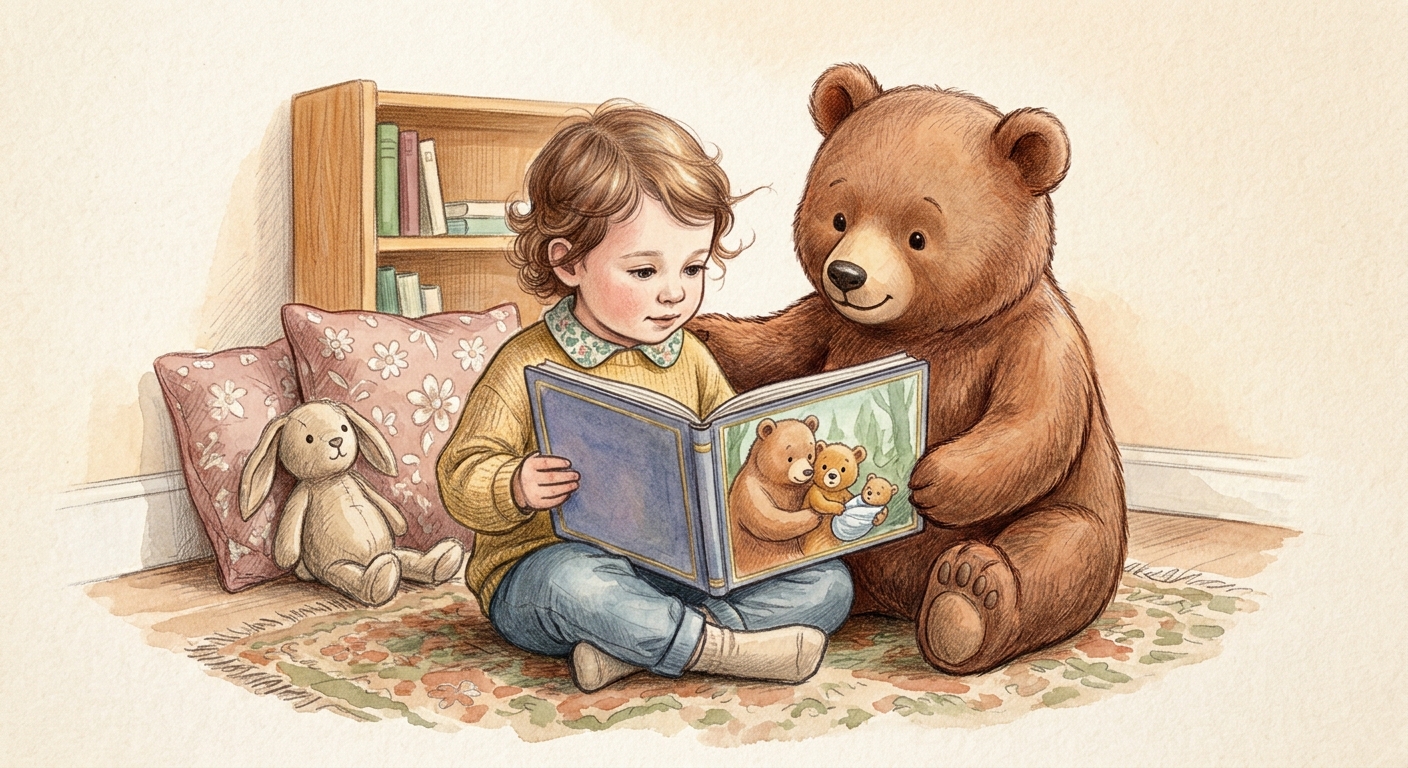
A four-year-old who's about to become a big sister doesn't want a lecture about sharing the spotlight. She wants a story about a kid like her, in a house like hers, who felt exactly this knotted-up way and came out the other side. That's the whole engine of social-emotional learning through stories: a child meets their own big feeling at a safe distance, in a character they recognize, and learns they're not the only one who's felt it. Custom stories do this better than off-the-shelf ones because they can be about this child, this feeling, right now.
The generic feelings book on the shelf is fine. A story that's clearly about your kid's actual situation is a different kind of help.
Why do mirror-stories help with big feelings?
Because a feeling you can see in someone else is a feeling you can finally talk about.
When a child is in the grip of something big, jealousy of the new baby, dread about the first day, the bedtime fear they can't explain, talking about it head-on is hard. It's too close. But watch a character go through it, and suddenly there's a little distance, a handle to grab. The story names the feeling so the child doesn't have to. It shows the feeling is survivable, because the character survives it. And it quietly says you are not the only one, which is half of what any kid needs to hear.
Educators call these mirror books: the child sees themselves reflected. The closer the mirror, the more it works.
What makes a custom SEL story land harder?
Specificity, and a character the child can hold onto.
A store-bought feelings book has to be vague enough to fit every family. Yours can be about the exact thing: the dog that died, the move to a new town, the friend who said the mean thing at recess. When the details match the child's real life, the mirror gets sharper, and the comfort gets real.
- Name the specific feeling and situation, not "feelings" in general. "Mo feels the worry-wobbles before the first day" beats "a book about emotions."
- Keep it gentle and small. One feeling, a soft turn, a kind resolution. SEL stories shouldn't lecture or scare; they sit with the feeling and then ease it.
- Use a character the child bonds with, ideally one that comes back, so each new feeling is faced alongside a familiar friend.
The more the story looks like the child's real life, the more permission it gives.
How do you make a gentle, targeted SEL story?
This is where making your own beats buying one, and it's what Storybench is for.
You write the story in your own warm voice, about the exact situation, the new sibling, the move, the first sleepover. You build the character once (maybe the child themselves, maybe a gentle stand-in animal) and every page inherits it, so the friend the child bonds with stays the same friend from start to finish. No drawing skills needed; you describe the scene and the feeling on each page, and it's illustrated for you in one calm, consistent style you chose once.
A recurring character matters more here than almost anywhere, because the bond is the help. If the comforting character looked different every page, that bond couldn't form. With a persistent cast it holds, so the same friend can help with the worry-wobbles this month and the new baby next month. (Building your own child as that character is covered in a book starring your own child.)
When it's done, you publish a print-ready PDF to read at bedtime or share with the class, or an EPUB for tablets. See personalized classroom books for using this across a whole class. The obvious question, doesn't AI doing the art make it less heartfelt? No. You write every tender line; the tool only draws. The heart is yours.
Frequently asked questions
How do custom stories support social-emotional learning?
They let a child meet their own big feeling at a safe distance, in a character they recognize. A story about the exact situation (new sibling, first day, a loss) names the feeling, shows it's survivable, and tells the child they're not alone, which is the core of SEL.
Why is a custom SEL book better than a generic feelings book?
A store-bought book has to be vague to fit everyone. A custom one can match the child's real details, so the mirror is sharper and the comfort is specific. The closer the story is to the child's actual situation, the more it helps.
Why does a consistent character matter for SEL stories?
Because the child's bond with the comforting character is the help. A recurring character that looks the same every page, and comes back across stories, lets that bond form and lets one familiar friend support the child through many different feelings.
Do I need writing or art skills to make one?
No. You write the story in plain words, the way you'd say it, and the illustration is handled for you in one consistent style. Picture books reward a plain, true voice, so your own words are exactly what works.
When a child in your life is wrestling with something big, make the story that's about exactly that. Start your book and give them a mirror to look in.