Search "AI book generator" and you'll find tools that promise a finished book at the press of a button. Here's the distinction worth understanding before you press it: a generator hands you whatever it rolled, and you take what you get. Authoring means you write, direct, and own the result. For a book you'll actually publish and care about, that gap is the whole ballgame.
This is the one place we'll use the word "generator" out loud, because it names a real choice. Let's draw the line clearly, then you decide which side you want to be on.
What does an "AI book generator" actually mean?
Generation is the slot-machine model. You give it a topic, it produces the words and the pictures, and out comes a book-shaped object. Pull the lever, take the payout.
When it's good, it's fast and a little magic. The catch is in the verb: it generates. The voice is the model's, the choices are the model's, and your role is to accept or pull again. The output is smooth, competent, and anonymous, because it was assembled to be inoffensive to everyone, which means it's nobody's in particular. Including yours.
For a throwaway, fine. For your kid's book, the one read fifty times at bedtime, "whatever it rolled" is a strange thing to hand over.
How is authoring different?
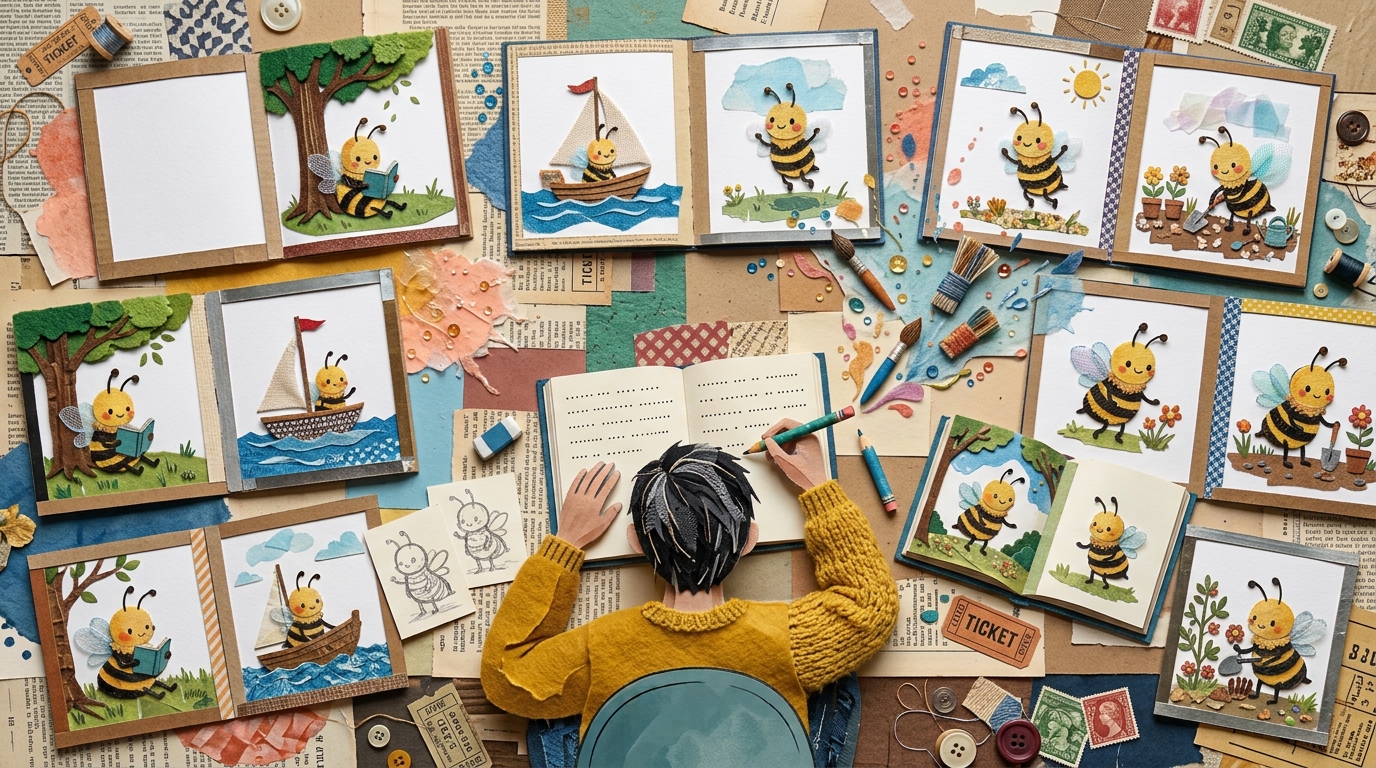
Authoring flips who's in charge. You write the words. You make the calls. You own the book. The AI is a tool you point, not an author you defer to.
Concretely, authoring means:
- You write the text. Every line is yours, in your voice, with the real names and the inside jokes a model can't know.
- You direct the pictures. You describe each page; the illustration serves your scene instead of replacing your judgment.
- You edit until it's right. Not-quite pages get re-done on your call, not re-rolled at random.
- You own the result. It's your book to publish and keep.
The division of labor we believe in: you author, the AI illustrates. The crayons can be the machine's job. The words and the heart stay yours.
Generator vs. authoring tool, side by side
Same dream (a book without doing every part by hand), two very different deals:
- Who writes the words. Generator: the model. Authoring tool: you.
- Your role. Generator: accept or re-roll. Authoring tool: write, direct, edit.
- The voice. Generator: the model's, smooth and generic. Authoring tool: yours, specific and true.
- Consistency. Generator: whatever each roll produced. Authoring tool: a cast you build once that holds across every page.
- Ownership. Generator: you take what you get. Authoring tool: it's your book.
Why does this matter for a real book?
Because a book you'll publish has your name on it. Readers can feel the difference between a story that was generated and one that was meant, even if they can't name why. The generated one is fine and forgettable. The authored one has a fingerprint.
Here's the objection, said plainly: "If the AI does the illustrations, isn't an authoring tool just a fancier generator?" No, and the line is the words. Hand a model your words and it draws them; that's a tool. Hand it the writing and it decides who your character is; that's a generator wearing your name. The work that makes a book yours, the noticing, the voice, the choices, never gets outsourced in authoring. (We make the broader case in why "prompt and pray" fails for whole books.)
Storybench is firmly an authoring tool, not a generator. You write every page. You build your cast once and pick one of a range of illustration styles, and the AI only illustrates, holding your characters consistent across the book. Then you publish a print-ready PDF, an EPUB, or social images, of a book you own. If the words are the part you're wrestling with, don't let AI write your kid's book is the heart of it; how it works shows the flow.
Frequently asked questions
What's the difference between an AI book generator and an authoring tool?
A generator writes the book for you and you accept what it produces. An authoring tool keeps you in charge: you write the words and direct the art, the AI illustrates, and you own the result.
Is Storybench an AI book generator?
No. Storybench is an authoring and illustration tool. You write every page yourself; the AI only illustrates and keeps your cast consistent. The book is yours.
Why not just let a generator do the whole thing?
Because the words come out smooth and anonymous, in the model's voice, not yours. For a book you'll publish and read aloud for years, the authored version has the specificity and heart a generated one can't.
Do I still get AI help if I author it myself?
Yes, where it belongs: illustration. The AI draws your pages and holds your characters consistent across the book, so the part you keep is the writing and the direction.
When you're ready to author instead of accept, start your book. Pull the lever on a slot machine, or write the book. Up to you.