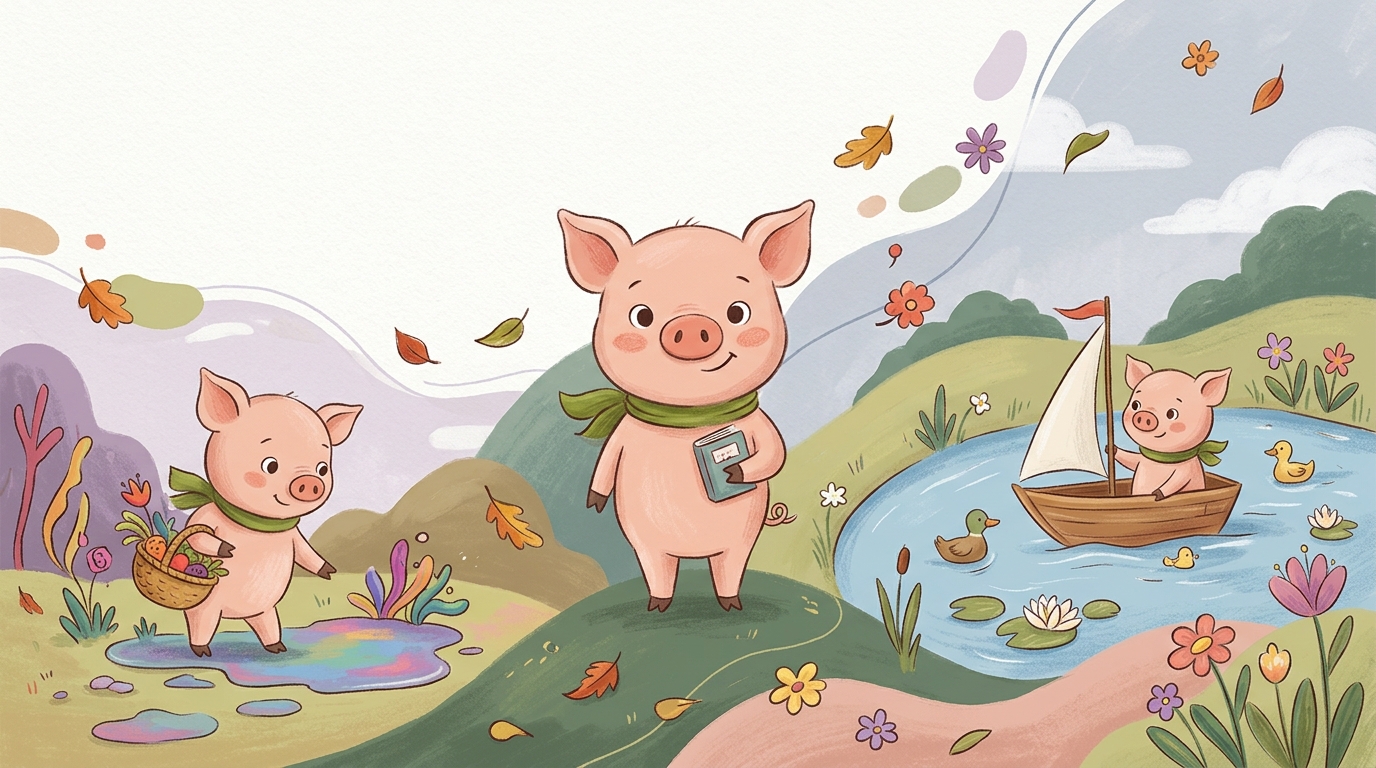
You made one book with one character kids loved, and now you're wondering how to turn that one character into a whole series. The short answer: keep the hero exactly the same and let the stories around her change. Same kid, new adventures, book after book, without redrawing her from scratch every time.
A series isn't a stack of new characters. It's one character readers already love, shown in new situations. That's why Elephant and Piggie can run for dozens of books. The draw is the friend you already know.
What makes a one-character series work?
Look at the ones kids ask for again. The Gruffalo. Bluey. Pippi. The hero is fixed. The look, the personality, the little tics, all locked. What moves is the situation: a new place, a new problem, a new friend who wanders in.
So the job splits cleanly. Hold the hero steady. Vary everything else.
- Steady: her look, her voice, the way she talks and reacts. This is the thing readers came back for. Don't redesign it.
- Variable: the setting, the stakes, the supporting cast, the lesson or the joke. This is where each book earns its place.
How do you keep one hero across many books?
Here's where most one-character series fall apart. Book one, your hero looks perfect. Book three, she's drifted, slightly different face, the scarf's the wrong red, and kids notice. They notice fast. A child who loves a character has memorized that character, and a stranger wearing her clothes breaks the spell.
The fix is to stop re-creating the hero each book and instead reuse the same one. Build her once as a cast member, then pull that exact character into every new book. Her look and her world come along automatically.
That's the model in Storybench. Your hero lives in your World as a cast member. Start a new book inside that World and she's already there, same face, same scarf, same locked style. You write the new story; she stays herself. You never re-describe her, and you never type a style word to keep the look. (For the why behind that, see build a recurring character.)
A simple way to plan the series
- Pin down who she is in one line. Pickle the fox is brave but forgets things. That sentence drives every plot.
- List five situations that test that one trait. Pickle forgets her friend's birthday. Pickle gets lost being brave. Each is a book.
- Keep the hero locked and change one big thing per book: a new place, or a new friend, or a new fear.
- Reuse the cast and world for each one, so the only new work is the new story.
Notice the pattern? You invent the character once, and then you're just answering, what happens to her next. That's a series you can actually sustain, and it's why your second book is faster than your first.
Common questions
How many books make a series?
Three is enough to feel like a series to a reader. But the point isn't a number, it's that the same hero carries each one, so even two books already build the habit.
How do I keep my character looking the same in every book?
Reuse the actual character rather than re-describing her each time. When the hero is a saved cast member that every book inherits, her look holds by default instead of drifting.
Can the supporting characters change between books?
Absolutely. New friends and one-off characters keep the series fresh. Add the ones who recur to your cast so they stay consistent too; let the one-offs come and go.
Do I need to plan the whole series up front?
No. Nail one character and one good book first. The series can grow one story at a time, because the hard part, the hero, is already built.
You already did the hardest thing: you made a character worth following. When you're ready to give her a second adventure, and a third, give it a try.