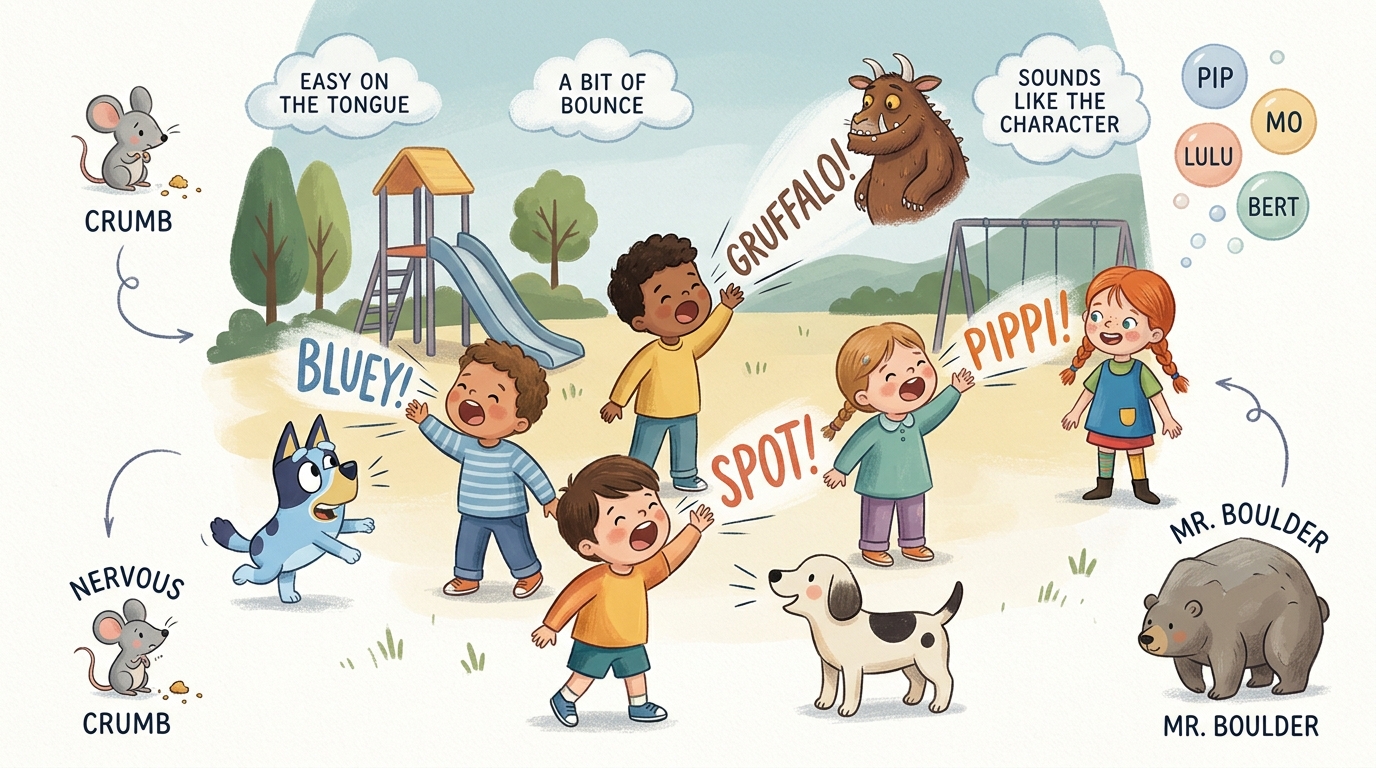
A great character name is the one a four-year-old can say, wants to say, and shouts across a playground. Naming children's book characters well comes down to three things: it sounds good out loud, it's simple enough for a small mouth, and it fits who the character is. Bluey. Gruffalo. Pippi. Spot. None of them are accidents.
If a kid can't say it, they can't love it. Start there.
What makes a character name stick?
Sound, mostly. Kids hear a book long before they can read it, so a name lives in the ear first. The stickiest names tend to share a few traits:
- Easy on the tongue. One or two syllables, sounds a small child already makes. Pip, Mo, Lulu, Bert.
- A bit of bounce. Repeated sounds and hard consonants are fun to say. Bluey, Gruffalo, Pippi, that double-letter spring.
- It fits the character. The name should feel like the creature. A nervous little mouse named Crumb. A big slow bear named Mr. Boulder.
Notice none of those rules is "be clever." Clever is for the parent. The name is for the kid.
How do you test a name before you commit?
Say it out loud, ten times, fast. Then say it the way you'd say it at bedtime, gently. Then imagine a three-year-old trying it. If your tongue trips or the kid would mangle it into something else, the name's working against you.
Better yet, float it past an actual child. "There's a fox in this story. Should he be called Rusty or Reynald?" Kids have shockingly strong, fast opinions about names. (Reynald never wins.)
A quick do and don't
Do:
- Keep it short, sayable, and warm.
- Let the sound hint at the personality.
- Pick a name that still works when you yell it with delight.
Don't:
- Reach for a name parents need a pronunciation guide for.
- Name two characters things that sound alike (Milly and Molly will blur in a read-aloud).
- Get so cute the joke wears out by page three.
- Forget to picture it on a future cover and a future sequel.
That last one matters more than it looks.
Why name for the long game?
Because the names kids fall hardest for are the ones they get to meet again. A child doesn't ask for "that book about the dog." They ask for Bluey. The name becomes the doorway back. So if there's any chance your character returns for another book, name them like a character you'll be saying out loud for years, not just on page one of this one.
A good name is the start of a character readers come back for. That return is the whole magic of a recurring hero, and it only works if the character (look and name) stays the same across every book. With Storybench you build that character once as part of your cast and reuse them title after title, so the name your kid loves always belongs to the same face. (More on that in building a recurring character.)
Frequently asked questions
Should I use my own child's name?
For a personalized book made just for them, absolutely, that's the magic. For a book you hope strangers will love too, pick a name that travels well and is easy for any kid to say.
Can a made-up word be a good name?
Yes, that's where some of the best ones come from (Gruffalo, Snork). Just make sure it's easy to pronounce and fun to say. Invented is fine; unsayable is not.
How many named characters should a picture book have?
Usually few. One hero and a small handful of others. Too many names and young readers lose track. The fewer you name, the more each name lands.
Name them like you'll say it for years
Pick the name you'd happily shout at a bedtime, then build the story around it. When you're ready to give that character a face and a book, start your book. And if it's good, don't stop at one (see how to write a picture book).