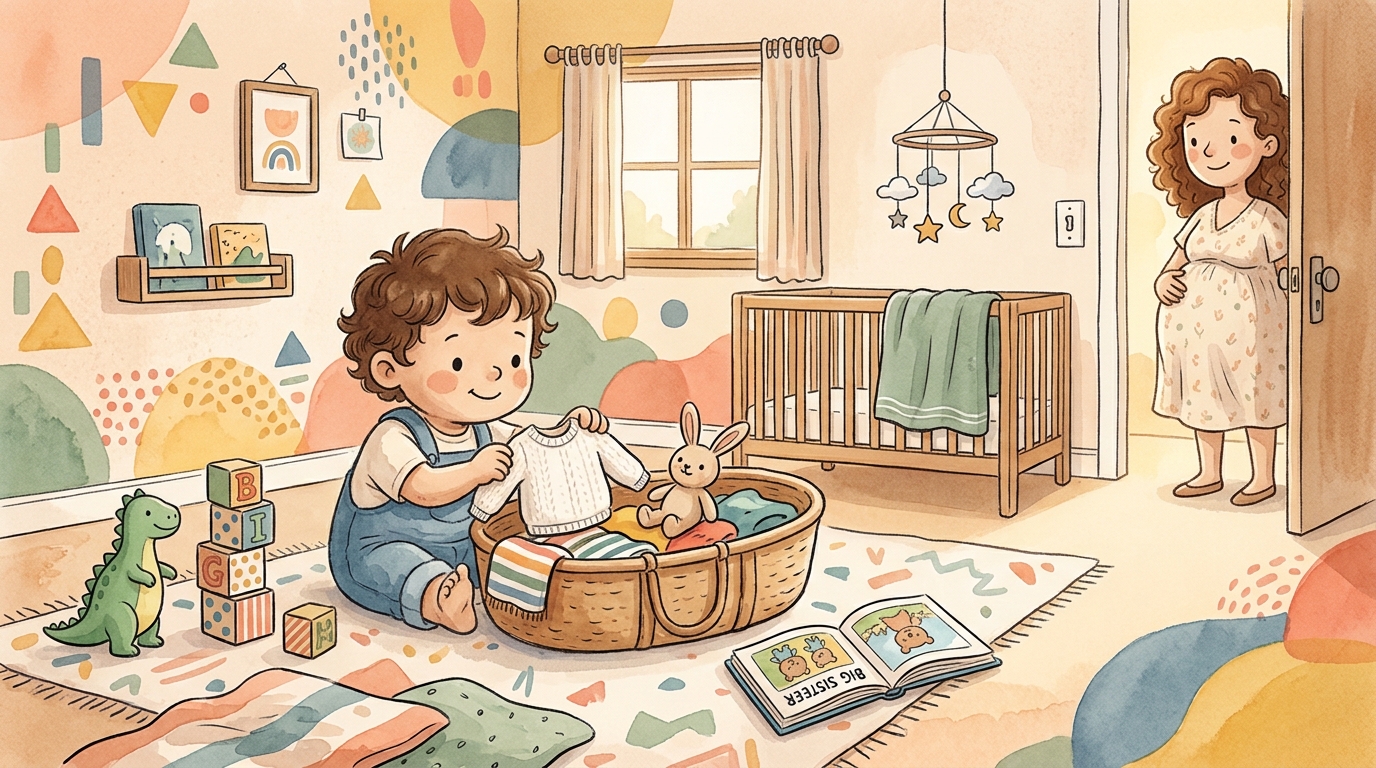
Is there a baby on the way, and a big kid in your house who keeps asking when it's coming, what it does all day and whether it can go back? A new sibling book for kids can help, but only if the book is about your child, not about some bear who gets a baby brother.
Quick answer: write a short book where your older child is the hero. Put in their real routines (the bath, the story, the dinosaur cup), let the baby arrive as a character, and end with a plain promise of what stays the same. Writing it together matters as much as reading it.
Why write a new sibling book instead of buying one?
Store-bought books are lovely, and reading them is a good idea. The American Academy of Pediatrics' parenting site, HealthyChildren.org, suggests reading books about new-borns and siblings with your child, and starting the conversation early in everyday moments, like when you're shopping for baby things.
But a book you write together does something a shelf book can't. It uses your child's own name, your own front door and the exact way you say goodnight. They aren't hearing about a stranger's feelings. They're looking at a page that says, in effect, this is you, and here's what's going to happen.
It also hands them a job. A child who's helped write the book isn't waiting for the baby to happen to them.
What should go in the book?
Think of it as a short list of true things.
- Your child's real days. Waking up, breakfast, the walk to the park, the bedtime song.
- The baby, kept small and honest. The baby sleeps a lot, cries sometimes, can't play yet.
- Mixed feelings, said out loud. Excited, curious, a little cross. All allowed.
- A job that's real. Choosing a blanket, singing, handing over a diaper.
- One page of what stays the same. More on that below.
HealthyChildren.org also notes that some children slip backwards after a birth (wanting a bottle again, or having accidents) and that extra attention works better than scolding. A book that says "sometimes big kids feel like babies too, and that's okay" makes that normal before it happens.
How do you write it with your child?
You don't need to be a writer, and your child doesn't need to be able to read. Four pages in one sitting is a fine start.
- Ask three questions. What's your favourite thing we do together? What are you most curious about with the baby? What would you like to say to the baby? Write their answers down word for word.
- Pick a repeating line. "I'm [name], and I'm the big sister." Say it on every page. Small children love a line they can chant.
- Draft a one-line page for each routine. "In the morning we make toast." "At night we read two books."
- Add the baby on page five or six. Not on page one. The child leads, the baby joins.
- End with a promise. Only promise what you can keep.
- Read it at bedtime. And again, and again. Let your child change the words.
Pictures from your own life
Some families draw. Some paste in photos. Some want illustrations that look like a real picture book, with their child as a recognizable character on each page. If that's you, a little planning goes a long way. Our guide to planning a picture book page by page is a quick read, and our post on why the words your child remembers are yours is worth a read too.
How do you show a child what stays the same?
This is the page your child will probably reread most. Make a list of what won't change, then pick the three that matter most to them: Dad still does the pancake Saturdays. Bedtime still ends with the same song. The rabbit still sleeps in the same bed.
Be careful here. Don't promise "nothing will change." Change is coming, and kids can tell. Promise what's actually true: "The baby will need a lot of help. And I will still read to you every night."
HealthyChildren.org adds that the baby needs time with you, but so does your older child, and regular one-on-one time is worth protecting. Your book can name it: "Every day we have our special time."
Can a pre-schooler really help write a book?
Yes, in the ways that count. They can pick the character's name, decide what the baby is called in the story, say what they'd tell the baby, and choose the last page. You do the typing. That's what the words your child remembers are made of: the ones they helped put there.
When should you start, and how long should it be?
Start whenever your child begins noticing. Nemours KidsHealth notes that young children may not grasp how far off a due date is, so some parents anchor it to the season instead ("when the leaves are falling"). Keep the book short: eight to twelve pages is plenty for a toddler or pre-schooler. Longer books can wait until the baby's here and you're telling the story of the first week.
Where does Storybench fit in?
Storybench is for writing your own illustrated book, with a cast that looks the same on page twelve as it did on page one. You build your child as a character once, add the places they know (the kitchen, the park) as settings, and each page you illustrate keeps them looking like themselves. You write and direct. The AI illustrates. Writing and laying out the book is free, and credits are only spent when pages are illustrated. See how it works if you want the short version.
A final, gentle note: a book is a comfort and a conversation starter, not a replacement for support from your pediatrician or a family professional if your child is struggling.
Frequently asked questions
What is the best new sibling book for a toddler?
The best one is usually the one that sounds like your child's life. Published books are a good place to start, and a short book you write together, with their routines and name, often becomes the one they ask for most.
How do I prepare my child for a new sibling?
Talk about the baby early and in everyday moments, look at their own baby pictures, and read books about siblings. HealthyChildren.org also recommends protecting one-on-one time and expecting some regression after the birth.
How long should a new baby book be?
Short. Eight to twelve pages is plenty for a toddler or pre-schooler. Keep a repeating line, one routine per page and a clear last page about what stays the same.
When should I start the book?
As soon as your child starts noticing or asking. There's no fixed date. Some families begin mid-pregnancy, and others wait until the baby is close.
Can I give my older child a book from the baby?
Yes. Some parents write a short page "from the baby" saying hello and thanking the big kid for waiting. Keep it honest and simple, and make sure the older child's own story still comes first.
Start the book together
Sit down this weekend with a pen and your child's answers to three questions. Then start your book and let your big kid see themselves as the hero. The baby will arrive in a story that's already theirs.