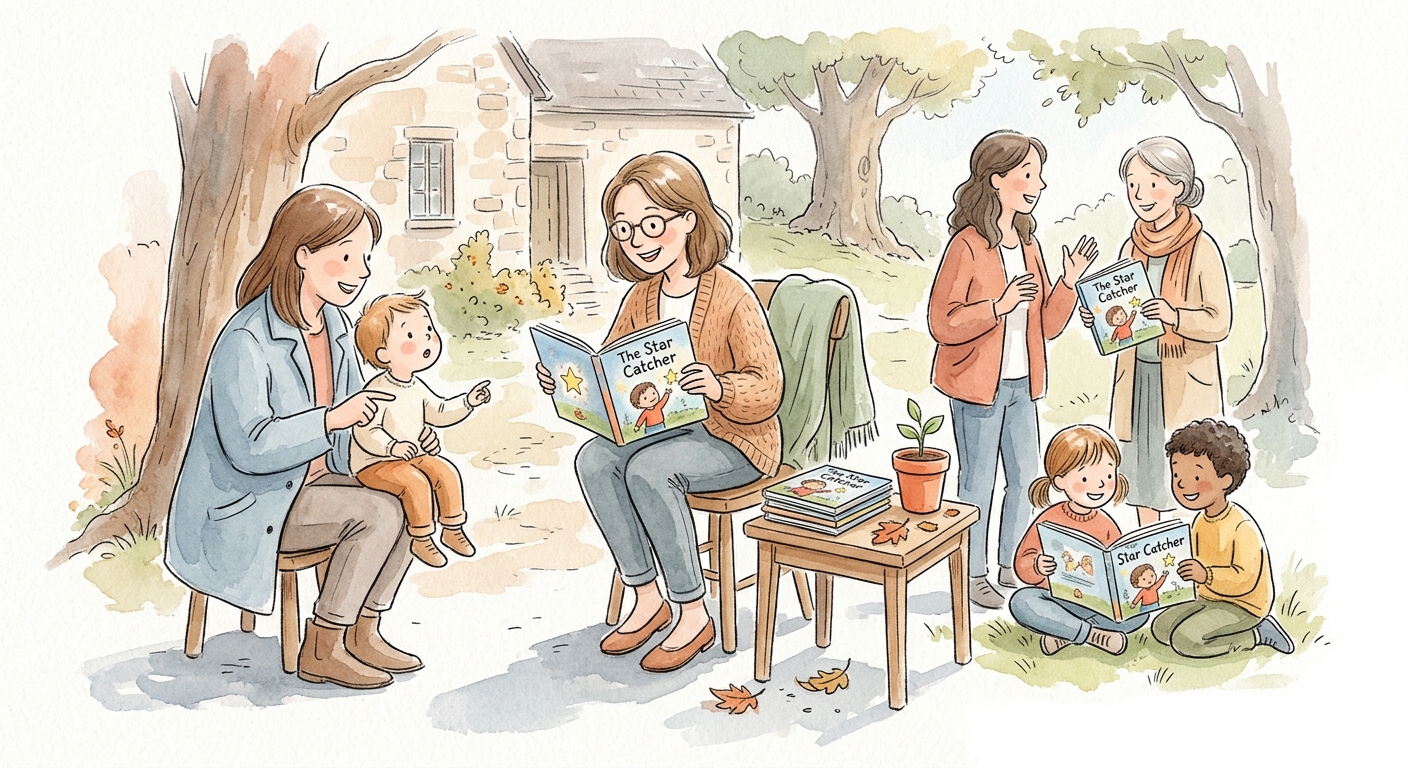
Here's the good news about how to market a self-published children's book with no ad budget: ads were never the thing that sold kids' books anyway. Children's books sell through people, a parent who heard you read, a teacher who loved it, another mom who got it as a gift. Your job isn't to buy attention. It's to put the book in front of the small number of humans who'll fall for it, and let them do the rest. That's free. It just takes showing up.
Here's what actually moves copies, and what's a waste of your evening.
What actually sells a self-published children's book?
Audience first, always. Not "a bigger audience," the right one: parents, grandparents, teachers, and librarians who want exactly your book. A few hundred of the right people beats fifty thousand strangers scrolling past.
The things that work, roughly in order of bang-for-effort:
- Read it aloud where parents can see. A short read-aloud post of a single spread, you reading a page, your kid's reaction, is the most natural ad there is. It shows the book doing its actual job.
- Schools and libraries. Email your local school and library and offer a free reading. A librarian who likes your book recommends it for years. This is the highest-leverage thing on the list and almost nobody does it.
- Your own email list. Even a tiny one. The people who hand you their email are the people who'll buy book two on day one. Start it before you publish, not after.
- Social images that show, not tell. Post real pages, the character, a behind-the-scenes peek. A picture book markets itself if you let people see the pictures.
- Word of mouth, nudged. Ask the people who liked it to tell one friend, leave one review, gift one copy. Specific small asks get done; "please share" doesn't.
Notice the theme: every one of those is human, local, and free. None of them is a campaign.
What should you skip?
Plenty, honestly. With no budget and limited time, don't pour either into:
- Paid ads for a single low-priced book. The math rarely works on one title, and you'll spend more learning the ad platform than you make.
- Chasing a huge follower count. Ten thousand strangers who don't read kids' books are worth less than thirty parents who do.
- Expensive PR services and "book promo" blasts. Most are noise sold to anxious first-time authors.
- Being everywhere at once. Pick one or two channels you'll actually keep up, and go deep.
Now, someone's going to say all of this is slow. It is. Slow and free and real beats fast and paid and forgotten, especially for a book a family keeps on the shelf for years.
The quiet marketing engine: write the next one
The single best way to sell your first book is to publish your second. Each new title with the same beloved character sends readers back to buy the earlier ones. A recurring character is a marketing engine that runs on its own: the kid who loves book three wants books one and two by bedtime. (See why your second book is faster than your first and building a recurring character.)
This is where building once pays off twice. In Storybench you build your cast and world a single time, then every new book reuses it, so the same character stays consistent across the whole shelf. That consistency is what turns a stack of titles into a thing readers follow, which is the most durable marketing you can have. And the social images you need for posts? They export straight from the book. See how it works, or where to sell beyond Amazon for the shelves to point all this at.
Frequently asked questions
How do I market a children's book with no money?
Lean on free, human channels: read-aloud posts, school and library readings, your own email list, social images of real pages, and nudged word of mouth. Skip paid ads and PR blasts for a single low-priced title.
Do I need a big social media following to sell kids' books?
No. A small, right audience of parents, teachers, and librarians outperforms a large unrelated following. Focus on reaching the people who actually buy children's books, not on follower count.
What's the best free way to promote a picture book?
Offering free readings at local schools and libraries. It costs nothing, reaches the exact audience, and a librarian's recommendation keeps selling your book long after the visit.
How does writing more books help me sell?
Each new title featuring the same character drives readers back to your earlier books. A consistent, recurring character makes a series, and a series sells itself title to title.
You don't need a budget. You need a book worth telling a friend about, and the nerve to read it out loud where someone can hear. When yours is ready, start your book and start with one school, one post, one parent.