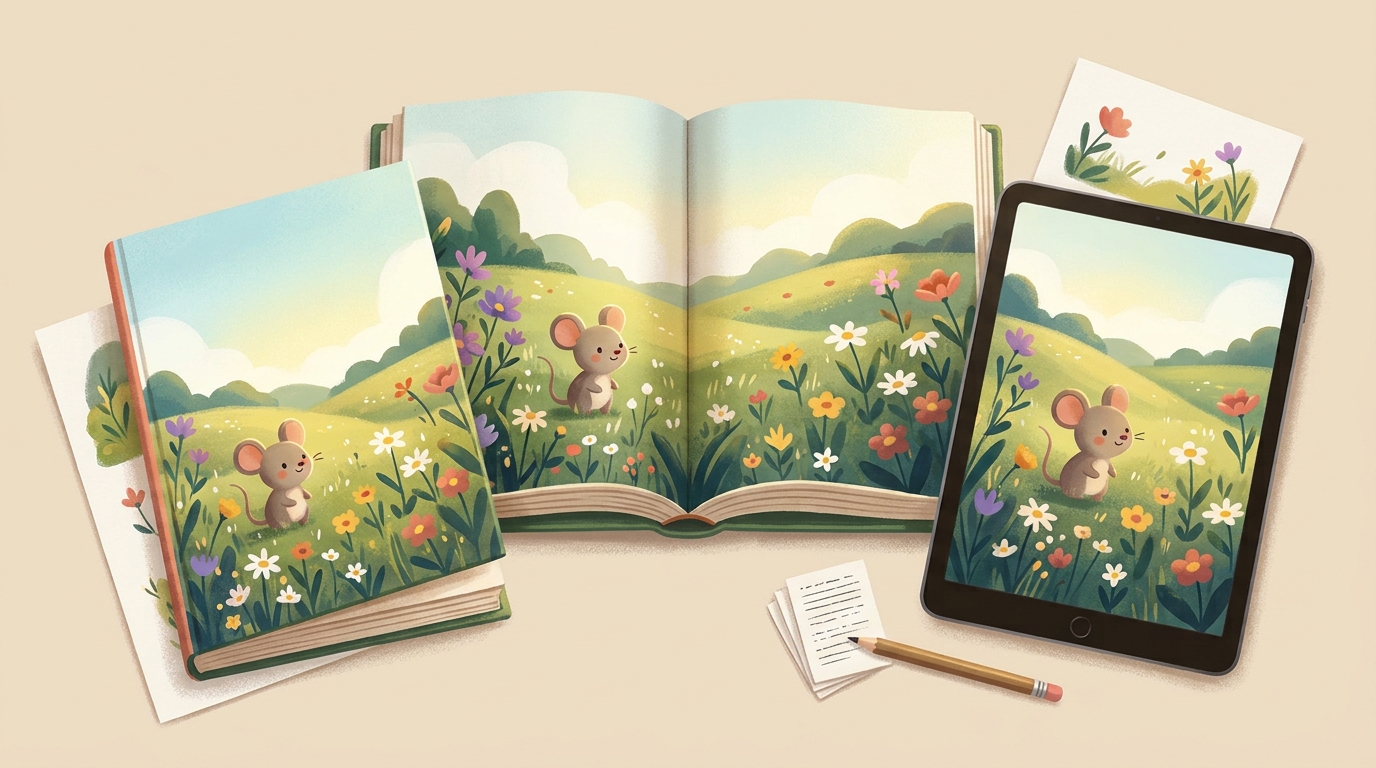
EPUB vs. print PDF for your illustrated book
Ebook or print? When to choose EPUB, when to choose a print-ready PDF, and why a picture book can happily use both.
Guides, stories & honest notes on writing illustrated books you actually authored, with a cast that stays itself page after page.
Ebook or print? When to choose EPUB, when to choose a print-ready PDF, and why a picture book can happily use both.
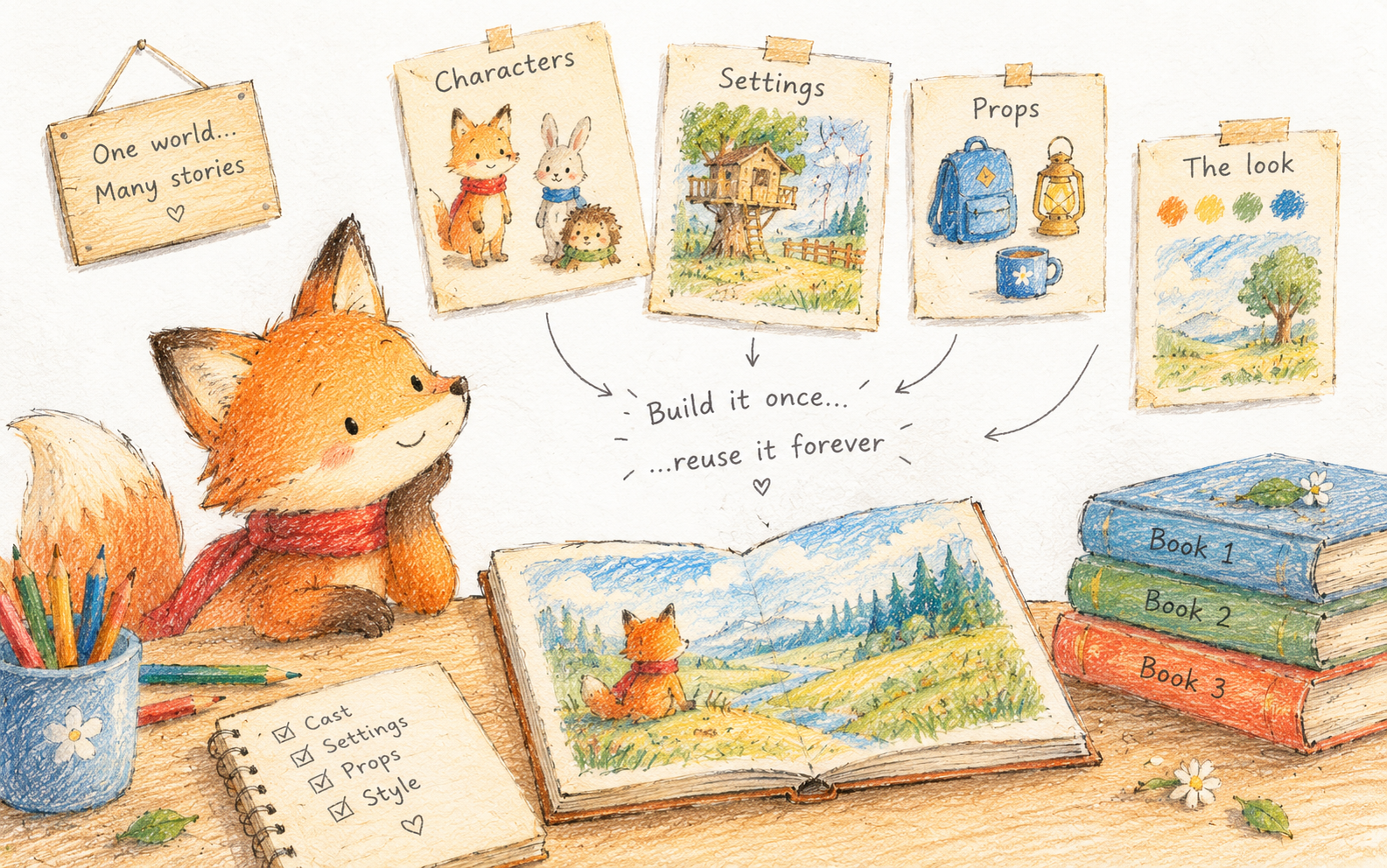
Characters, settings, and props are the expensive part to invent. Build your story world once and every future book reuses it.
Got a lesson and no book that fits? Here's the low-fuss way for a teacher to make a custom picture book that fits the topic exactly.
What "print-ready" actually means for KDP, and how to export a children's book PDF that uploads cleanly the first time.
The 32-page picture book isn't an accident. Here's the printing math behind the most common length on the shelf.
You're not selling to kids, you're reaching the grown-ups who buy for them. A practical guide to marketing a self-published children's book.
Set up KDP, prepare a print-ready interior and cover, fill in the details screen, and go live. A step-by-step KDP guide for children's books, with sources.
Write it, illustrate it, get it print-ready, and publish it yourself. A plain, step-by-step guide to self-publishing a children's book in 2026.
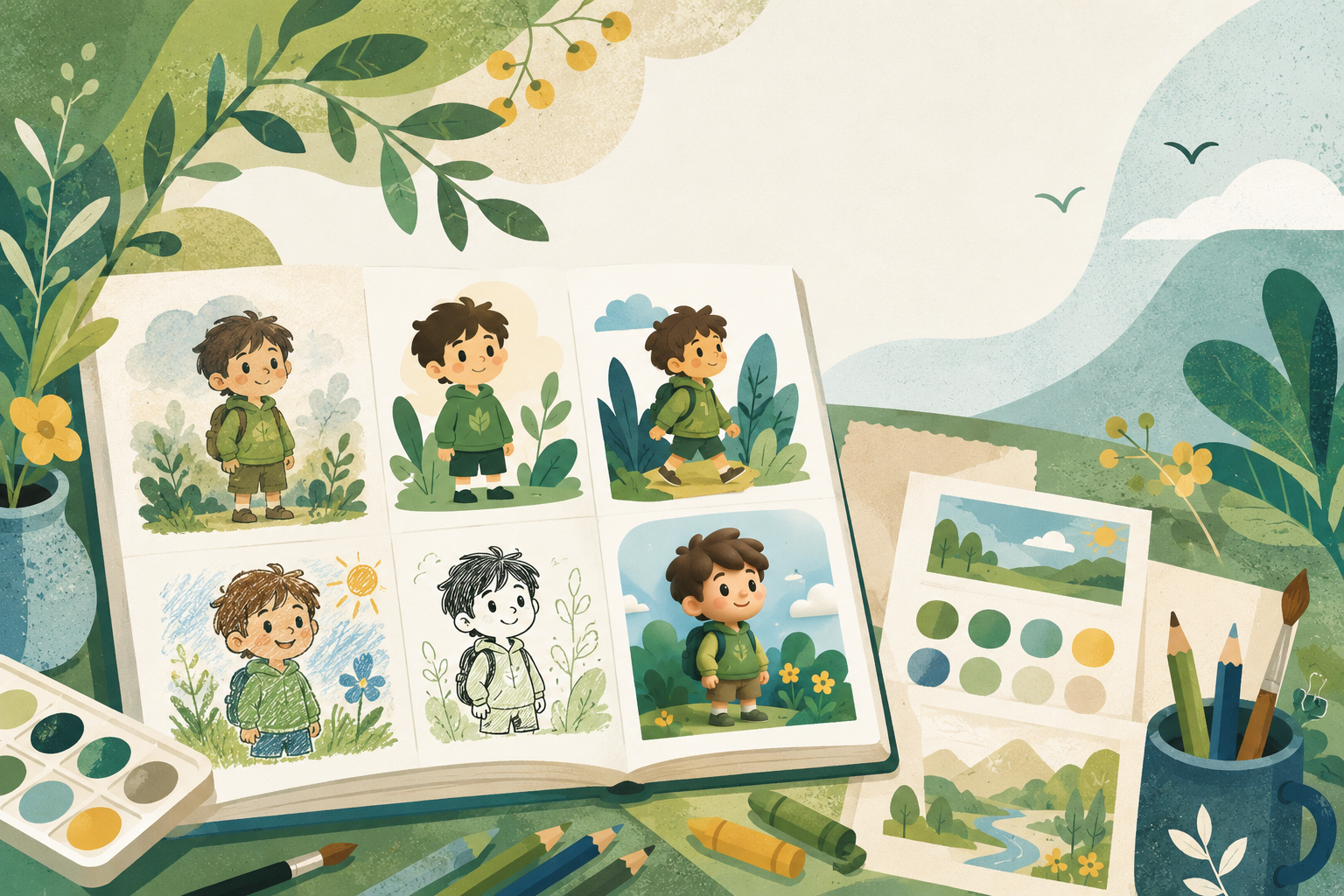
Watercolor, flat, papercut, 3D? How to pick an illustration style for a children's book that fits your story's age and tone, and hold it.
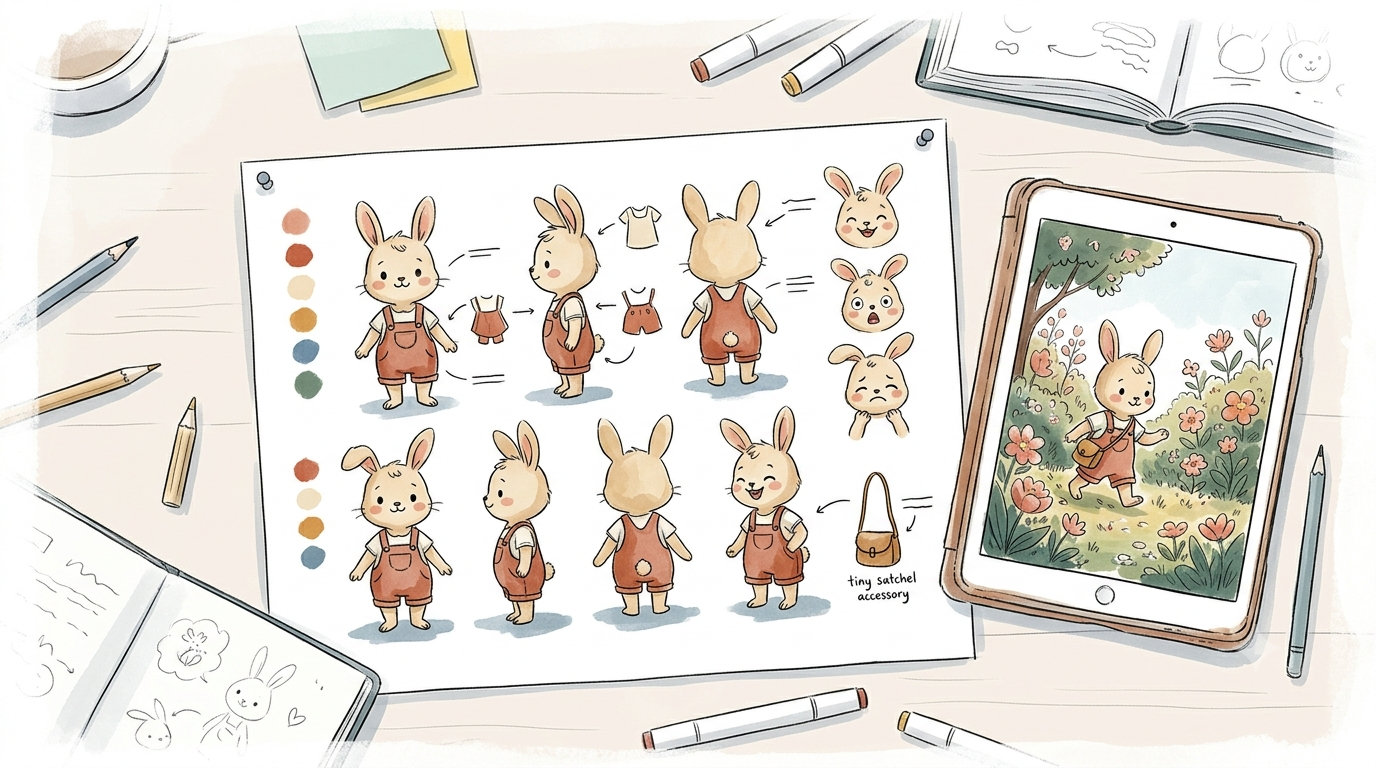
A character sheet locks your character's look so it stays the same everywhere. Here's what to put in one and how to use it.
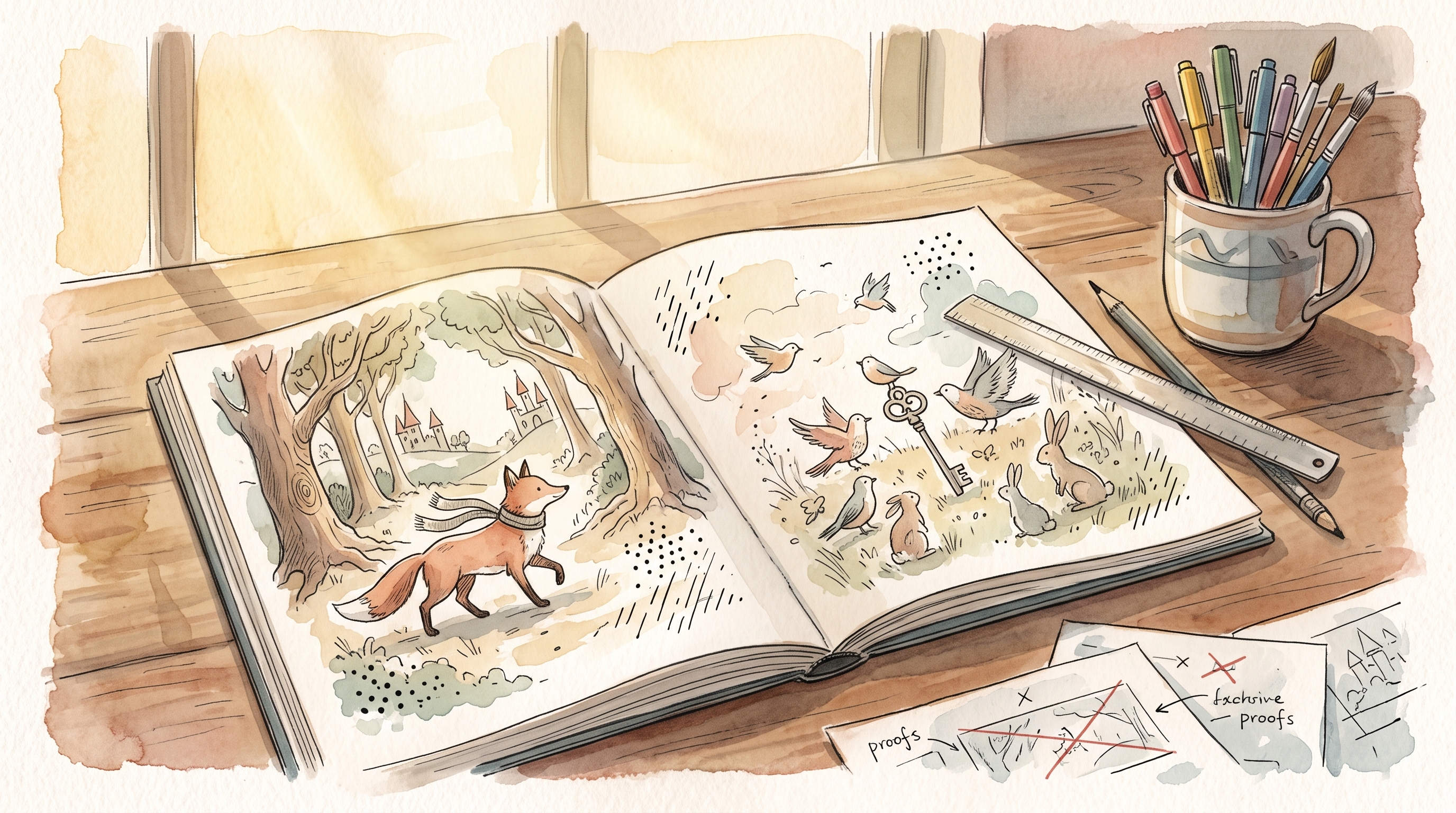
Trim, bleed, margins, DPI: the print specs that trip up first-time picture-book authors on KDP, explained simply.
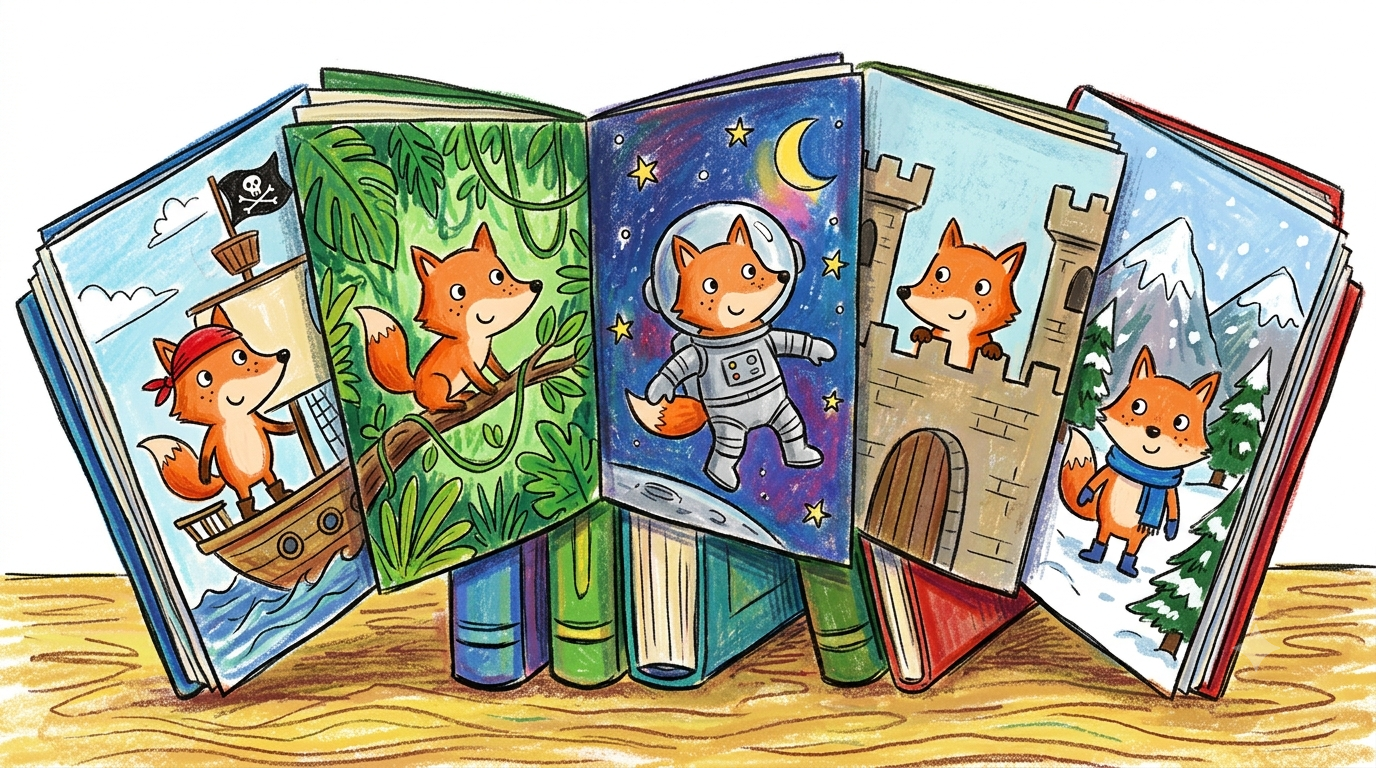
Bluey. The Gruffalo. Elephant & Piggie. Readers return for characters they know. Here's how to build one and keep it consistent across books.
Create your account and start with your words. You only spend credits when you ask the AI to draw.
Start creating